Growing Information

Growing zone guide
Growing Zone Zone 3, Zone 4, Zone 5, Zone 6, Zone 7, Zone 8, Zone 9
Sunlight Partial shade to full shade
Type of Soil Slightly acidic to neutral
Mature Height 12 to 18 inches
Maintenance Level Low maintenance
Water Requirement Moderate watering (once a week)

Learn more about this plant

Additional Information
Growth Rate

– Moderate growth rate

– Reaches mature size in 2–3 years

– Height: 12–16 inches

– Spread: 20–30 inches

– Forms a tight, mounded clump

Colorful Leaves Yes
Flowering Yes
Bloom Color Purple & Lavender
Ornamental Berries N/A
Disease resistant Yes
Cold Tolerant Yes
Heat Tolerant No
Drought Tolerant No
Deer Resistant No
Edible No
Wildlife Attraction

– Flowers attract bees and other pollinators

– Foliage may be susceptible to slugs and deer

Self-pollinating Cross-pollinating
Seasonality

– Emerges in mid to late spring

– Provides vibrant foliage display from spring through frost

– Blooms in midsummer

– Goes dormant in winter

Ideal For
  • – Shade gardens with color contrast
    – Accent planting
    – Foliage combinations
    – Containers and woodland borders
Leaf Description

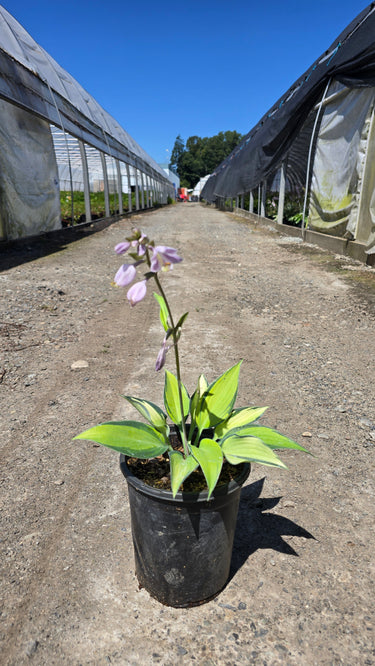
– Broad, heart-shaped leaves with blue-green margins and gold-chartreuse centers

– Leaf center may shift toward creamy yellow in brighter light

– Leaves are thick and slightly corrugated, offering moderate slug resistance

– Foliage displays excellent substance and holds color through the season

Flower Description

– Pale lavender to light purple, bell-shaped flowers

– Appear on 20–24 inch tall scapes

– Bloom period is early to midsummer

– Not heavily scented but adds soft accent and vertical interest

Pruning & Maintenance

– Remove yellowing or damaged leaves as needed

– Cut back foliage to the ground after first frost in fall

– Remove flower stalks after blooming for a cleaner appearance

Water Needs

– Requires evenly moist soil for best performance

– Water deeply 1–2 times per week during dry periods

– Mulch helps reduce moisture loss and stabilize root zone temperatures

Light Needs

– Grows best in partial shade

– Tolerates morning sun, which enhances leaf coloration

– Avoid full afternoon sun, which can cause leaf scorch or fading

Harvesting

– Flowers may be cut for small arrangements

– Divide clumps in spring or fall for propagation or spacing

Fertilizing

– Use a balanced, slow-release fertilizer in early spring

– Supplement with compost to improve soil structure and nutrient content

– Avoid high nitrogen fertilizers, which can encourage leaf softness and poor coloration

Additional Care Tips N/A
Pollination

– Flowers are pollinated by bees and other insects

– Produces seed pods if pollinated, but rarely propagated by seed

– Most propagation is done by division to maintain color and form

Companion Plants

– Heuchera for foliage color contrast and low mounding habit

– Brunnera for cool-toned foliage and spring blue flowers

– Astilbe for color and fine-textured flower spikes

– Ferns for graceful contrast in shaded settings

– Pulmonaria and Tiarella for naturalistic woodland pairings

Flowering and Seasonality

– Emerges in mid to late spring

– Provides vibrant foliage display from spring through frost

– Blooms in midsummer

– Goes dormant in winter

– Pale lavender to light purple, bell-shaped flowers

– Appear on 20–24 inch tall scapes

– Bloom period is early to midsummer

– Not heavily scented but adds soft accent and vertical interest

Pet Friendly

Yes

Growing Zone
  • Zone 3
  • Zone 4
  • Zone 5
  • Zone 6
  • Zone 7
  • Zone 8
  • Zone 9

Click to enlarge