
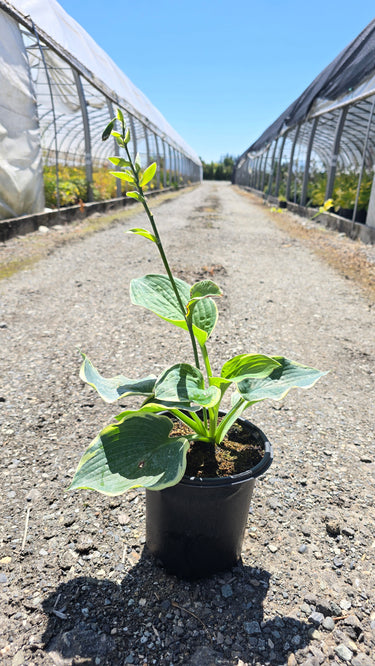

Northern Exposure Hosta
Huge heavily corrugated blue-green leaves with wide creamy-white margins form an imposing slug-resistant clump — an outstanding large hosta for creating bold impact in shade borders. (Hosta hybrid 'Northern Exposure')
Hosta ‘Northern Exposure’ is a robust, variegated hosta cultivar revered for its bold foliage, garden reliability, and commanding presence in shaded landscapes. A sport of the legendary Hosta sieboldiana ‘Elegans’, it inherits the large, thick, corrugated leaves that make an architectural statement while offering excellent pest resistance and durability in both northern and temperate climates.
Fragrant pale flowers bloom in midsummer, attracting bees and adding gentle movement above the heavy foliage. With time, Northern Exposure develops into a reliable, show-stopping perennial that commands attention and provides structure, shade coverage, and refined elegance in even the deepest corners of the garden.
Your payment information is processed securely. We do not store credit card details nor have access to your credit card information.
Growing Information
Growing zone guideLearn more about this plant
Additional Information
| Growth Rate | |
|---|---|
| Colorful Leaves | Yes |
| Flowering | |
| Bloom Color | Purple & Lavender |
| Ornamental Berries | N/A |
| Disease resistant | |
| Cold Tolerant | |
| Heat Tolerant | |
| Drought Tolerant | |
| Deer Resistant | |
| Edible | |
| Wildlife Attraction | |
| Self-pollinating | Cross-pollinating |
| Seasonality | |
| Ideal For | |
| Leaf Description | |
| Flower Description | |
| Pruning & Maintenance | |
| Water Needs | |
| Light Needs | |
| Harvesting | |
| Fertilizing | |
| Additional Care Tips | N/A |
| Pollination | |
| Companion Plants |
Flowering and Seasonality
Pet Friendly
Yes
Growing Zone
- Zone 3
- Zone 4
- Zone 5
- Zone 6
- Zone 7
- Zone 8
- Zone 9
Click to enlarge
Growing Zone

You may also like


