Growing Information

Growing zone guide
Growing Zone Zone 3, Zone 4, Zone 5, Zone 6, Zone 7, Zone 8, Zone 9
Sunlight Partial shade to full shade
Type of Soil Slightly acidic to neutral
Mature Height 12 to 15 inches
Maintenance Level Low maintenance
Water Requirement Moderate watering (once a week)

Learn more about this plant

Additional Information
Growth Rate

– Moderate

– Reaches full size in 2–3 years

– Mature height: 14–18 inches

– Mature spread: 30–36 inches

– Forms a compact, symmetrical mound

Colorful Leaves Yes
Flowering Yes
Bloom Color Purple & Lavender
Ornamental Berries N/A
Disease resistant Yes
Cold Tolerant Yes
Heat Tolerant No
Drought Tolerant No
Deer Resistant No
Edible No
Wildlife Attraction

– Flowers attract bees and pollinators

– Foliage may be browsed by deer and affected by slugs unless protected

Self-pollinating Cross-pollinating
Seasonality

– Emerges in spring

– Maintains attractive golden foliage from spring through fall

– Blooms in midsummer

– Dormant in winter; dies back fully after frost

Ideal For

– Brighten shaded spaces
– Contrasting color beds
– Woodland gardens
– Edging or container use

Leaf Description

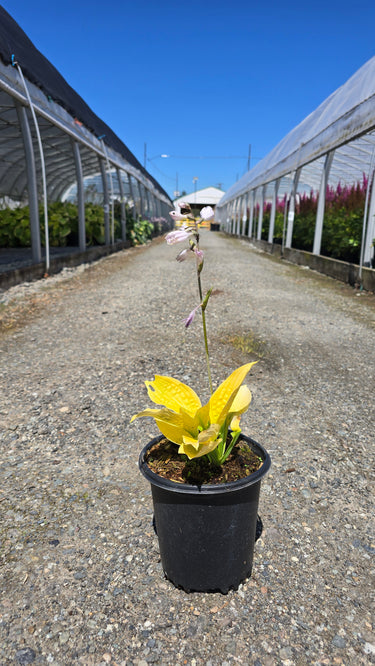
– Lance-shaped to heart-shaped leaves with a golden-yellow hue

– Leaf color is more vivid in light shade or filtered sun

– Smooth texture with moderate thickness, helping with slug resistance

– Leaves mature to a chartreuse tone in deeper shade

Flower Description

– Lavender to pale lilac bell-shaped blooms

– Appears in mid to late summer on 20–24 inch scapes

– Flowers are subtle but add light vertical contrast

– Lightly fragrant and beneficial to pollinators

Pruning & Maintenance

– Trim off yellowing or damaged leaves during the season

– Cut entire plant back to the ground in late fall after frost

– Remove flower scapes after blooming unless seed heads are desired

Water Needs

– Prefers evenly moist soil, especially during hot weather

– Water deeply once or twice weekly in dry conditions

– Mulching helps conserve soil moisture and protect shallow roots

Light Needs

– Performs best in partial shade to dappled light

– Tolerates more sun than typical blue hostas; morning sun enhances gold coloration

– Too much direct afternoon sun may bleach or scorch leaves in warmer zones

Harvesting

– Can be divided in spring or fall to propagate or rejuvenate mature clumps

– Flower stalks may be cut for simple arrangements

Fertilizing

– Apply balanced slow-release fertilizer in early spring

– Top-dress with compost to enrich soil and support foliage quality

– Avoid excessive nitrogen, which may reduce variegation clarity and lead to weak growth

Additional Care Tips N/A
Pollination

– Flowers attract bees and small pollinators

– Pollinated by insects but rarely propagated by seed

– Propagation is best done by division to maintain specific cultivar traits

Companion Plants

– Heuchera (Coral Bells) for compact mounds and foliage contrast

– Brunnera for cool blue foliage and early flowers

– Astilbe for moisture-loving height and texture

– Tiarella for spreading woodland groundcover

– Pulmonaria for early spring blooms and speckled leaves

Flowering and Seasonality

– Emerges in spring

– Maintains attractive golden foliage from spring through fall

– Blooms in midsummer

– Dormant in winter; dies back fully after frost

– Lavender to pale lilac bell-shaped blooms

– Appears in mid to late summer on 20–24 inch scapes

– Flowers are subtle but add light vertical contrast

– Lightly fragrant and beneficial to pollinators

Pet Friendly

Yes

Growing Zone
  • Zone 3
  • Zone 4
  • Zone 5
  • Zone 6
  • Zone 7
  • Zone 8
  • Zone 9

Click to enlarge