

Wide Brim Hosta
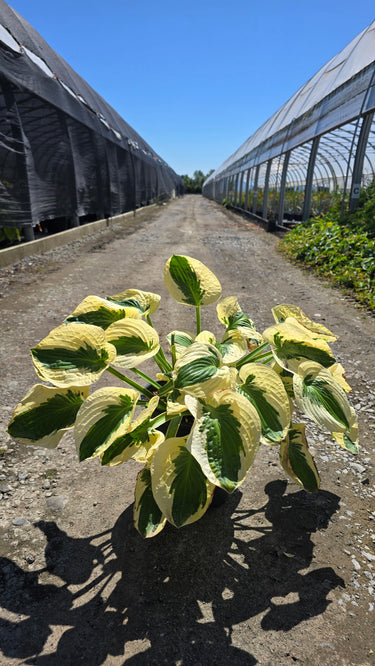
Classic large hosta with broad blue-green corrugated leaves boldly edged in creamy-yellow — a widely grown award-winning selection with exceptional substance and slug resistance. (Hosta hybrid 'Wide Brim')
Hosta 'Wide Brim' is a timeless shade garden favorite, known for its reliable performance, handsome foliage, and balanced form. As its name suggests, the plant features large blue-green leaves bordered by wide, creamy-yellow to white margins. The heart-shaped leaves arch slightly outward, forming a graceful, symmetrical mound that brings structure and color to shaded beds, borders, and woodland edges.
Ideal for gardeners seeking a hardy, dependable, and visually bold hosta, Wide Brim shines in mass plantings, under deciduous trees, or in combination with finer-textured companions like ferns and astilbes. Its enduring popularity stems from its graceful form, vivid coloring, and low-maintenance nature.
Your payment information is processed securely. We do not store credit card details nor have access to your credit card information.
Growing Information
Growing zone guideLearn more about this plant
Additional Information
| Growth Rate | |
|---|---|
| Colorful Leaves | Yes |
| Flowering | |
| Bloom Color | Purple & Lavender |
| Ornamental Berries | N/A |
| Disease resistant | |
| Cold Tolerant | |
| Heat Tolerant | |
| Drought Tolerant | |
| Deer Resistant | |
| Edible | |
| Wildlife Attraction | |
| Self-pollinating | Cross-pollinating |
| Seasonality | |
| Ideal For | |
| Leaf Description | |
| Flower Description | |
| Pruning & Maintenance | |
| Water Needs | |
| Light Needs | |
| Harvesting | |
| Fertilizing | |
| Additional Care Tips | N/A |
| Pollination | |
| Companion Plants |
Flowering and Seasonality
Pet Friendly
Yes
Growing Zone
- Zone 3
- Zone 4
- Zone 5
- Zone 6
- Zone 7
- Zone 8
- Zone 9
Click to enlarge
Growing Zone

You may also like


