Growing Information

Growing zone guide
Growing Zone Zone 3, Zone 4, Zone 5, Zone 6, Zone 7, Zone 8
Sunlight Partial shade to full shade
Type of Soil Slightly acidic to neutral
Mature Height 22 to 28 inches
Maintenance Level Low maintenance
Water Requirement High water needs (twice a week)

Learn more about this plant

Additional Information
Growth Rate
  • Growth Rate: Moderate, reaching its mature size within 3-5 growing seasons.

  • Mature Size: Grows to a height of 24-30 inches (up to 36 inches with flower spikes) and spreads 48-60 inches, forming a large, dense clump.
Colorful Leaves Yes
Flowering Yes
Bloom Color Purple & Lavender, White
Ornamental Berries N/A
Disease resistant No
Cold Tolerant Yes
Heat Tolerant No
Drought Tolerant No
Deer Resistant No
Edible No
Wildlife Attraction

Frances Williams attracts pollinators such as bees and butterflies with its summer blooms. The dense foliage also provides shelter for small insects and wildlife. Deer and rabbits tend to avoid this hosta due to its thick, textured leaves, making it a great option for gardens prone to browsing by wildlife.

Self-pollinating Self-pollinating
Seasonality
  • Seasonality: Herbaceous perennial; dies back in winter and regrows in spring.

  • Flowering Season: Mid-summer (June-July)

  • Bloom Description: Frances Williams produces tall spikes of pale lavender to white, trumpet-shaped flowers that appear in mid-summer. These delicate blooms rise above the dense foliage and attract bees and butterflies, adding a touch of vertical interest to the plant.
Ideal For

Shade gardens – woodland plantings – large borders – specimen planting for bold foliage – foundation plantings – underplanting of trees

Leaf Description

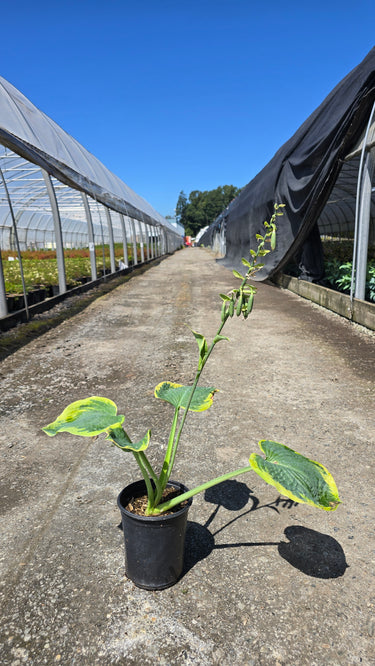
The standout feature of Hosta 'Frances Williams' is its large, heart-shaped blue-green leaves with wide, irregular chartreuse to golden-yellow margins. The leaves are heavily textured and corrugated, providing a bold and distinct appearance. As the plant matures, the foliage becomes more deeply textured, making it an excellent focal point in shaded garden spaces.

Flower Description

– Funnel-shaped blooms held above foliage on tall scapes

– Pale lavender to nearly white in color

– Blooming period: early to midsummer

– Flowers are modest but attractive and can attract bees

Pruning & Maintenance

Pruning is minimal for Hosta 'Frances Williams'. Remove spent flowers after blooming to maintain a neat appearance and redirect energy to the foliage. In late fall or early spring, cut back the dead foliage to the ground to allow new growth to emerge. Regularly remove any damaged or yellowing leaves to keep the plant healthy and tidy.

Water Needs

Frances Williams requires regular watering, especially during its first growing season. Keep the soil consistently moist but avoid overwatering or waterlogged conditions. Established plants are more drought-tolerant but perform best with consistent moisture, particularly during dry spells.

Light Needs

Thrives in partial shade to full shade. For the best foliage color and health, plant Frances Williams in a location that receives morning sun and afternoon shade or dappled sunlight throughout the day. Too much direct sunlight, especially in hot climates, can cause leaf burn and reduce the vibrancy of the chartreuse margins.

Harvesting

While Frances Williams is primarily grown for its foliage, the tall flower spikes can be harvested for use in fresh floral arrangements. The pale lavender to white flowers add a soft, vertical element to indoor displays. Harvest the flowers when they are fully open for the best effect.

Fertilizing

Fertilize in early spring with a balanced, slow-release fertilizer or organic compost to promote healthy growth and vibrant foliage. A second light feeding in mid-summer can help sustain the plant through the growing season. Avoid over-fertilizing, as this can lead to excessive leafy growth at the expense of flowers.

Additional Care Tips
  • Mulching: Apply a 2-3 inch layer of mulch around the base to retain moisture, regulate soil temperature, and reduce weeds. Mulching also helps protect the shallow root system from temperature extremes.

  • Pest and Disease Resistance: Frances Williams is generally resistant to pests and diseases. However, slugs and snails may occasionally target the foliage, especially in damp conditions. Use slug deterrents or traps if needed to protect the leaves.

  • Winter Care: In colder climates, Frances Williams will die back to the ground in winter. No special winter care is needed; simply cut back the dead foliage in early spring to allow fresh growth to emerge.
Pollination

Self-pollinating – can produce viable seed from its own pollen

– Can also cross-pollinate with nearby flowering hostas if pollinators are present

– Pollinated primarily by bees and occasionally by wind

Companion Plants

Perfect companion plants:

Astilbe – complements hosta with plume-like flowers and similar moisture/shade needs

Ferns (e.g., Dryopteris, Athyrium) – offer fine-textured contrast to bold hosta foliage

Brunnera macrophylla – pairs well with large-leaf hostas and adds delicate blue spring flowers

Heuchera – adds vibrant foliage color and blends well in partial shade

Pulmonaria – early blooms and speckled foliage for multi-season interest

Tiarella cordifolia – low-growing and great for carpeting around hostas

Solomon’s Seal (Polygonatum) – graceful arching stems rise behind Frances Williams’ broad leaves

Flowering and Seasonality
  • Seasonality: Herbaceous perennial; dies back in winter and regrows in spring.

  • Flowering Season: Mid-summer (June-July)

  • Bloom Description: Frances Williams produces tall spikes of pale lavender to white, trumpet-shaped flowers that appear in mid-summer. These delicate blooms rise above the dense foliage and attract bees and butterflies, adding a touch of vertical interest to the plant.

– Funnel-shaped blooms held above foliage on tall scapes

– Pale lavender to nearly white in color

– Blooming period: early to midsummer

– Flowers are modest but attractive and can attract bees

Pet Friendly

No

Growing Zone
  • Zone 3
  • Zone 4
  • Zone 5
  • Zone 6
  • Zone 7
  • Zone 8

Click to enlarge