
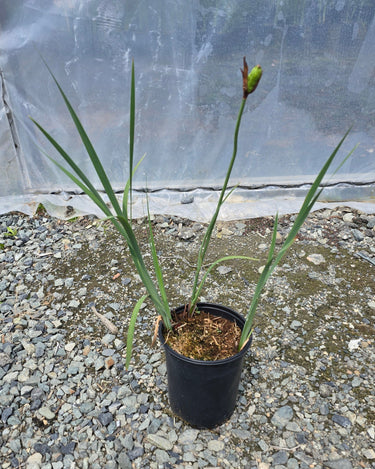

Caesar's Brother Siberian Iris
A classic Siberian iris with deep violet-blue blooms on graceful 3' stems in early summer, followed by attractive upright strap-like foliage that remains tidy and attractive all season. (Iris sibirica 'Caesar's Brother')
Iris sibirica 'Caesar's Brother' is a classic and reliable Siberian Iris cultivar, celebrated for its striking deep purple flowers and graceful, grass-like foliage. Blooming in late spring to early summer, its vibrant blossoms rise above the foliage, adding vertical interest and a splash of color to garden beds and borders. The plant's clumping habit and slender leaves provide a refined texture reminiscent of ornamental grasses, maintaining visual appeal even after the flowering period.
Adaptable to a range of soil conditions, including moist and boggy areas, 'Caesar's Brother' thrives in full sun to partial shade and requires minimal maintenance once established. Its resistance to common garden pests like deer and rabbits, along with its attractiveness to pollinators such as bees and butterflies, makes it a valuable addition to wildlife-friendly gardens. Whether planted en masse, along water features, or as a focal point in mixed perennial borders, 'Caesar's Brother' offers enduring beauty and garden performance.
Your payment information is processed securely. We do not store credit card details nor have access to your credit card information.
Growing Information
Growing zone guideLearn more about this plant
Additional Information
| Growth Rate | |
|---|---|
| Colorful Leaves | No |
| Flowering | |
| Bloom Color | Purple & Lavender |
| Ornamental Berries | N/A |
| Disease resistant | |
| Cold Tolerant | |
| Heat Tolerant | |
| Drought Tolerant | |
| Deer Resistant | |
| Edible | |
| Wildlife Attraction | |
| Self-pollinating | Cross-pollinating |
| Seasonality | |
| Ideal For | |
| Leaf Description | |
| Flower Description | |
| Pruning & Maintenance | |
| Water Needs | |
| Light Needs | |
| Harvesting | |
| Fertilizing | |
| Additional Care Tips | N/A |
| Pollination | |
| Companion Plants |
Flowering and Seasonality
Pet Friendly
No
Growing Zone
- Zone 3
- Zone 4
- Zone 5
- Zone 6
- Zone 7
- Zone 8
- Zone 9
Click to enlarge
Growing Zone

You may also like


