Growing Information

Growing zone guide
Growing Zone Zone 4, Zone 5, Zone 6, Zone 7
Sunlight Bright light
Type of Soil Slightly acidic to neutral
Mature Height 2-3 feet
Maintenance Level Low maintenance
Water Requirement Low to moderate (once a week in hot climate, once every 2 weeks in regular climate)

Learn more about this plant

Additional Information
Growth Rate

  • Speed: Moderate, with an annual growth of about 6-8 inches.
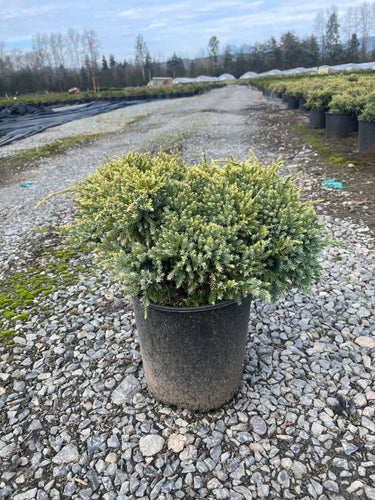
  • Mature Size: At maturity, Dream Joy reaches a height of 1-2 feet and spreads 2-3 feet, making it perfect for small spaces or as a focal point in rock gardens or borders.
Colorful Leaves Yes
Flowering No
Bloom Color N/A
Ornamental Berries N/A
Disease resistant Yes
Cold Tolerant No
Heat Tolerant Yes
Drought Tolerant Yes
Deer Resistant Yes
Edible No
Wildlife Attraction

While Dream Joy junipers are not particularly known for attracting pollinators, their dense growth offers shelter to small wildlife, and birds may occasionally feed on their small, blue berries.

Self-pollinating Self-pollinating
Seasonality
  • Flowering Season: Junipers are not typically grown for their flowers, as Dream Joy does not produce significant blooms.
  • Seasonality: Evergreen, offering consistent color and structure throughout the year.
Ideal For

Accent Shrub: Adds bright contrast to evergreen plantings

Foundation Plantings: Low height and colorful texture suit front-of-border use

Rock Gardens: Excellent in alpine or drought-tolerant gardens

Container Plantings: Compact habit makes it ideal for year-round planters

Low Hedges or Borders: Neat, rounded form works well in mass plantings or edging

Erosion Control: Effective on slopes or banks due to spreading habit

Leaf Description

This juniper features bright golden-yellow new growth that transitions into a blue-green as the season progresses. The needle-like foliage is dense and soft to the touch, forming a rounded, compact mound. The color contrast between the yellow tips and mature green leaves provides year-round visual interest.

Flower Description

Juniperus squamata 'Dream Joy' produces small, inconspicuous flowers that are not ornamental or fragrant. The plant's beauty lies in its foliage rather than its blooms.

Pruning & Maintenance

Pruning is minimal for this juniper. It maintains a naturally compact and rounded shape but can be lightly trimmed to remove any dead or damaged branches. Pruning can be done in early spring before new growth appears.

Water Needs

Juniperus squamata 'Dream Joy' is relatively drought-tolerant once established. Water regularly during the first growing season to help establish a deep, extensive root system. Afterward, water as needed, especially during prolonged dry periods.

Light Needs

This juniper thrives in full sun, needing at least 6 hours of direct sunlight per day to maintain its vibrant golden-yellow and blue-green foliage. It may tolerate partial shade, but its color will be less intense.

Harvesting

Not applicable; Juniperus squamata 'Dream Joy' is grown for ornamental purposes and does not require harvesting.

Fertilizing

Fertilize in early spring with a balanced, slow-release fertilizer to encourage healthy growth. Once established, this juniper requires minimal feeding, especially if planted in nutrient-rich soil.

Additional Care Tips
  • Mulching: Apply a 2-3 inch layer of mulch around the base to retain moisture and suppress weeds, especially during hot summer months.
  • Pest and Disease Resistance: Dream Joy is generally resistant to pests and diseases. It is deer-resistant and thrives in poor soil conditions.
  • Winter Hardiness: This plant is very cold-hardy, maintaining its striking color even in harsh winter climates.
Pollination

Juniperus 'Dream Joy' is dioecious, meaning male and female flowers occur on separate plants. This cultivar is typically grown for foliage, not fruit production. Pollination is not required for ornamental performance—berries (if any) are rare and usually absent unless both male and female junipers are present nearby.

The foliage is the primary attraction, not cones or flowers.

Companion Plants
  • Lavandula (Lavender) – Purple flowers and silvery foliage contrast beautifully
  • Salvia nemorosa – Deep violet tones pop next to 'Dream Joy's’ golden highlights
  • Coreopsis verticillata ‘Moonbeam’ – Soft yellow flowers pair well with its creamy variegation
  • Festuca glauca ‘Elijah Blue’ – Cool silver-blue tones enhance visual harmony
  • Carex oshimensis ‘EverColor Everest’ – Provides a softer variegated foil

  • Buxus (Boxwood) – Clean structure balances Dream Joy’s color and spread

    Spiraea japonica ‘Goldflame’ – Bright spring foliage and pink flowers enhance contrast

    Berberis thunbergii ‘Concorde’ – Deep burgundy foliage offers dramatic color contrast


Flowering and Seasonality
  • Flowering Season: Junipers are not typically grown for their flowers, as Dream Joy does not produce significant blooms.
  • Seasonality: Evergreen, offering consistent color and structure throughout the year.

Juniperus squamata 'Dream Joy' produces small, inconspicuous flowers that are not ornamental or fragrant. The plant's beauty lies in its foliage rather than its blooms.

Pet Friendly

Yes

Growing Zone
  • Zone 4
  • Zone 5
  • Zone 6
  • Zone 7

Click to enlarge