Growing Information

Growing zone guide
Growing Zone Zone 3, Zone 4, Zone 5, Zone 6, Zone 7, Zone 8, Zone 9
Sunlight Bright light to partial shade, Partial shade to full shade
Type of Soil Slightly acidic to neutral
Mature Height 30 to 50 ft.
Maintenance Level Moderate maintenance
Water Requirement Moderate watering (once a week)

Learn more about this plant

Additional Information
Growth Rate
  • Growth Rate: Fast-growing, capable of covering large surfaces within a few seasons.
  • Mature Size: Can grow up to 30-50 feet in height as a climbing vine, spreading 5-10 feet wide.
Colorful Leaves Yes
Flowering Yes
Bloom Color White , Green , Yellow
Ornamental Berries Blue berries
Disease resistant Yes
Cold Tolerant Yes
Heat Tolerant Yes
Drought Tolerant Yes
Deer Resistant No
Edible No
Wildlife Attraction

Engelmann's Virginia Creeper is highly attractive to wildlife. The plant's berries, which develop after flowering, are a food source for birds and small mammals. The dense foliage also offers shelter and nesting sites for birds. Pollinators, especially bees, are drawn to the small flowers during blooming season.

Self-pollinating Self-pollinating
Seasonality
  • Flowering Season: Early summer (June-July)
  • Seasonality: Deciduous; vibrant fall color with leaf drop in late autumn
Ideal For

– Covering fences, arbors, trellises, and walls

– Groundcover on slopes or embankments for erosion control

– Naturalizing in woodland edges or large landscapes

– Wildlife-friendly and pollinator gardens (flowers + berries)

Leaf Description

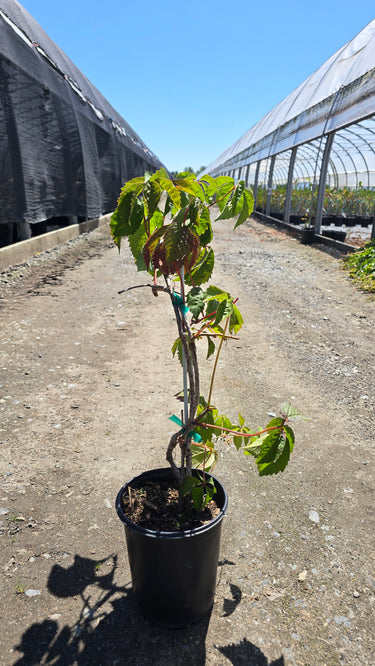
The plant features compound leaves with five leaflets, giving it a palmate appearance. Leaves are a rich green in spring and summer, transforming into stunning shades of red, purple, and orange in fall, providing seasonal interest. The leaflets are toothed and have a glossy texture, adding depth and vibrancy to the landscape.

Flower Description

Flower Color: Small, greenish-white to yellow-green

Flower Shape: Tiny, five-petaled star-like flowers arranged in loose, branched clusters (cymes)

Bloom Time: Early to mid-summer (typically June to July)

Fragrance: Mild to no noticeable fragrance

Pollinator Value: High – flowers produce nectar and attract bees, hoverflies, and other beneficial insects

Ornamental Value: Low – flowers are inconspicuous and not a primary ornamental feature; grown more for foliage and fruit

Growth Habit: Flowers emerge on new growth and may go unnoticed due to dense foliage

Role in Lifecycle: Flowers give way to small blue-black berries in late summer, enhancing seasonal wildlife interest

Pruning & Maintenance

Pruning is recommended to control its vigorous growth, especially if planted near structures like homes or fences. Trim back in late winter or early spring to remove dead or overgrown branches and to maintain the desired shape. Prune regularly to prevent it from overtaking other plants or structure

Water Needs

During the first growing season, water regularly to establish a strong root system. Once established, Parthenocissus quinquefolia 'Engelmannii' is drought-tolerant and only needs occasional watering during prolonged dry periods.

Light Needs

Thrives in full sun to partial shade. In full sun, the foliage colors in fall will be more vibrant, but it can also tolerate partial shade, where growth may be slightly slower, and autumn color may be less intense.

Harvesting

The berries of Virginia Creeper are not typically harvested for human use but are an important food source for wildlife. Avoid consuming the berries as they are toxic to humans.

Fertilizing

Fertilize in early spring with a balanced fertilizer to encourage healthy, vigorous growth. Established plants generally require little feeding, as Parthenocissus quinquefolia 'Engelmannii' thrives in poor soils.

Additional Care Tips
  • Mulching: Apply mulch around the base of the plant to retain moisture, especially during the first growing season.

  • Pest and Disease Resistance: Virginia Creeper is relatively pest-free and disease-resistant, making it a low-maintenance option for gardeners.

  • Invasiveness: This plant can be aggressive in some areas, so regular pruning and monitoring are necessary to prevent it from spreading uncontrollably.
Pollination

– Pollinated by insects, especially bees and flies

– Small, greenish flowers appear in summer (typically June–July)

– Self-fertile – a single plant can produce fruit without a second plant nearby

– Not showy, but nectar-rich and valuable for pollinators

Companion Plants

Clematis – climbs the same structures with a contrasting bloom period

Hydrangea petiolaris – offers complementary climbing foliage and white lacecap flowers

Hosta – lush foliage below supports the vertical interest of the vine

Ferns (e.g., Dryopteris, Athyrium) – ideal for shaded bases under trellises or walls

Heuchera – adds color and texture at the base in woodland or shade gardens

Actaea (Bugbane) – tall, dramatic foliage that pairs well near trellis bases

Panicum virgatum (Switch Grass) – architectural verticality complements climbing form

Cornus sericea (Red-Twig Dogwood) – contrasts with fall foliage and supports wildlife value

Flowering and Seasonality
  • Flowering Season: Early summer (June-July)
  • Seasonality: Deciduous; vibrant fall color with leaf drop in late autumn

Flower Color: Small, greenish-white to yellow-green

Flower Shape: Tiny, five-petaled star-like flowers arranged in loose, branched clusters (cymes)

Bloom Time: Early to mid-summer (typically June to July)

Fragrance: Mild to no noticeable fragrance

Pollinator Value: High – flowers produce nectar and attract bees, hoverflies, and other beneficial insects

Ornamental Value: Low – flowers are inconspicuous and not a primary ornamental feature; grown more for foliage and fruit

Growth Habit: Flowers emerge on new growth and may go unnoticed due to dense foliage

Role in Lifecycle: Flowers give way to small blue-black berries in late summer, enhancing seasonal wildlife interest

Pet Friendly

No

Growing Zone
  • Zone 3
  • Zone 4
  • Zone 5
  • Zone 6
  • Zone 7
  • Zone 8
  • Zone 9

Click to enlarge