
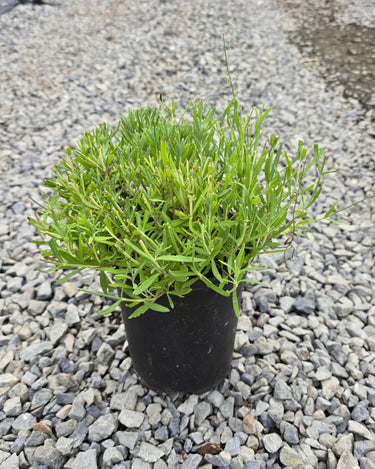

Big Time White Lavender
Unusually large pure white flower spikes rise above compact fragrant grey-green mounds — a striking and elegant alternative to traditional purple lavenders for white-themed borders. (Lavandula angustifolia Big Time White)
Lavandula angustifolia 'Big Time White' is a refined English lavender cultivar celebrated for its pristine white blooms and compact, mounding habit. Blooming earlier than many other varieties, it offers gardeners an extended season of fragrant, showy flowers that attract a multitude of pollinators. Its dense, gray-green foliage provides year-round interest, making it an excellent choice for borders, pathways, and container plantings.
Adaptable to various soil types, 'Big Time White' thrives in well-drained, sunny locations and exhibits remarkable drought tolerance once established. Its resistance to deer and rabbits further enhances its appeal for low-maintenance landscapes. Whether used for its ornamental beauty, aromatic foliage, or as a source for dried flowers and essential oils, 'Big Time White' stands out as a versatile and valuable addition to any garden.
Your payment information is processed securely. We do not store credit card details nor have access to your credit card information.
Growing Information
Growing zone guideLearn more about this plant
Additional Information
| Growth Rate | |
|---|---|
| Colorful Leaves | No |
| Flowering | |
| Bloom Color | White |
| Ornamental Berries | N/A |
| Disease resistant | |
| Cold Tolerant | |
| Heat Tolerant | |
| Drought Tolerant | |
| Deer Resistant | |
| Edible | |
| Wildlife Attraction | |
| Self-pollinating | Self-pollinating |
| Seasonality | |
| Ideal For | |
| Leaf Description | |
| Flower Description | |
| Pruning & Maintenance | |
| Water Needs | |
| Light Needs | |
| Harvesting | |
| Fertilizing | |
| Additional Care Tips | N/A |
| Pollination | |
| Companion Plants |
Flowering and Seasonality
Pet Friendly
Yes
Growing Zone
- Zone 5
- Zone 6
- Zone 7
- Zone 8
- Zone 9
Click to enlarge
Growing Zone

You may also like


