
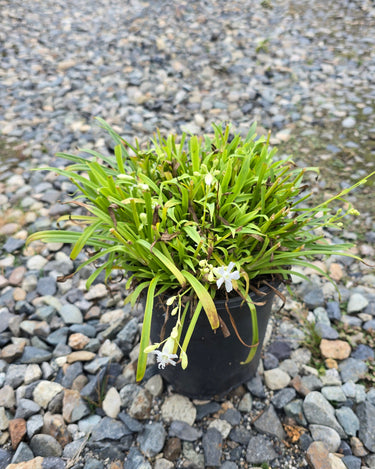

Snow Cloud Catchfly
Cloud-like masses of small pure white flowers bloom above sticky-stemmed green rosettes in late spring — a charming compact catchfly for rock gardens, borders, and naturalized settings. (Lychnis viscaria Snow Cloud 'Yantis')
Lychnis viscaria 'Snow Cloud' ('Yatnis') is a captivating perennial that brings a touch of ethereal beauty to gardens. Its large, white flower heads appear to float above the compact mound of grassy, gray-green foliage, creating a cloud-like effect that is both delicate and striking.
Blooming from May through August, 'Snow Cloud' offers a prolonged display of pristine white flowers that attract pollinators such as bees and butterflies. The plant's well-branched, upright stems support numerous blooms simultaneously, ensuring a continuous and abundant floral presence in the garden.
Whether used as a focal point or as part of a mixed planting scheme, Lychnis viscaria 'Snow Cloud' adds a unique and graceful charm to any landscape.
Your payment information is processed securely. We do not store credit card details nor have access to your credit card information.
Growing Information
Growing zone guideLearn more about this plant
Additional Information
| Growth Rate | |
|---|---|
| Colorful Leaves | No |
| Flowering | |
| Bloom Color | White |
| Ornamental Berries | N/A |
| Disease resistant | |
| Cold Tolerant | |
| Heat Tolerant | |
| Drought Tolerant | |
| Deer Resistant | |
| Edible | |
| Wildlife Attraction | |
| Self-pollinating | Cross-pollinating |
| Seasonality | |
| Ideal For | |
| Leaf Description | |
| Flower Description | |
| Pruning & Maintenance | |
| Water Needs | |
| Light Needs | |
| Harvesting | |
| Fertilizing | |
| Additional Care Tips | N/A |
| Pollination | |
| Companion Plants |
Flowering and Seasonality
Pet Friendly
Yes
Growing Zone
- Zone 4
- Zone 5
- Zone 6
- Zone 7
- Zone 8
Click to enlarge
Growing Zone

You may also like


