
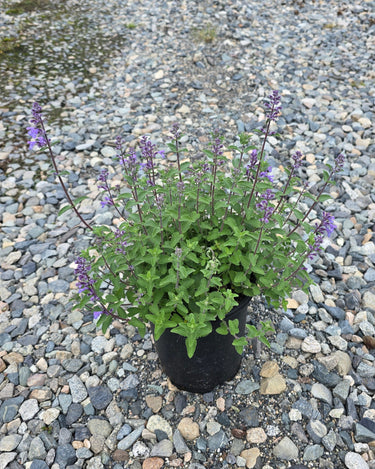

Picture Purrfect Catmint
Large showy lavender-blue flower spikes on a compact well-branched plant that blooms from late spring through summer — a showier, more upright catmint ideal for mixed borders and pollinator gardens. (Nepeta hybrid 'Picture Purrfect')
Nepeta hybrid 'Picture Purrfect' PP34502 is a refined, compact catmint that delivers vibrant color and early-season performance in a neat, mounded form. Unlike taller, sprawling Nepeta types, 'Picture Purrfect' forms a dense 10–12 inch tall dome of aromatic gray-green foliage topped with large, vivid blue-purple flowers accented by rosy-purple calyces. These richly colored blooms begin appearing approximately two weeks earlier than traditional varieties and continue well into early fall with minimal maintenance.
This selection excels in hot, dry, sunny locations and thrives in average to poor soils without fertilization. It is highly attractive to bees, butterflies, and hummingbirds, while resistant to deer and rabbits, making it a top choice for pollinator-friendly gardens. The mint-scented foliage adds sensory appeal and deters browsing wildlife. Its uniform growth habit makes it ideal for edging pathways, spilling slightly over low walls, or massing in sunny borders where tidy structure and reliable bloom are desired.
Whether used in traditional cottage gardens, modern dry landscapes, or patio containers, 'Picture Purrfect' lives up to its name with vivid, long-lasting performance and outstanding resilience.
Your payment information is processed securely. We do not store credit card details nor have access to your credit card information.
Growing Information
Growing zone guideLearn more about this plant
Additional Information
| Growth Rate | |
|---|---|
| Colorful Leaves | No |
| Flowering | |
| Bloom Color | Purple & Lavender, Blue |
| Ornamental Berries | N/A |
| Disease resistant | |
| Cold Tolerant | |
| Heat Tolerant | |
| Drought Tolerant | |
| Deer Resistant | |
| Edible | |
| Wildlife Attraction | |
| Self-pollinating | Cross-pollinating |
| Seasonality | |
| Ideal For | |
| Leaf Description | |
| Flower Description | |
| Pruning & Maintenance | |
| Water Needs | |
| Light Needs | |
| Harvesting | |
| Fertilizing | |
| Additional Care Tips | N/A |
| Pollination | |
| Companion Plants |
Flowering and Seasonality
Pet Friendly
Yes
Growing Zone
- Zone 4
- Zone 5
- Zone 6
- Zone 7
- Zone 8
- Zone 9
Click to enlarge
Growing Zone

You may also like


