
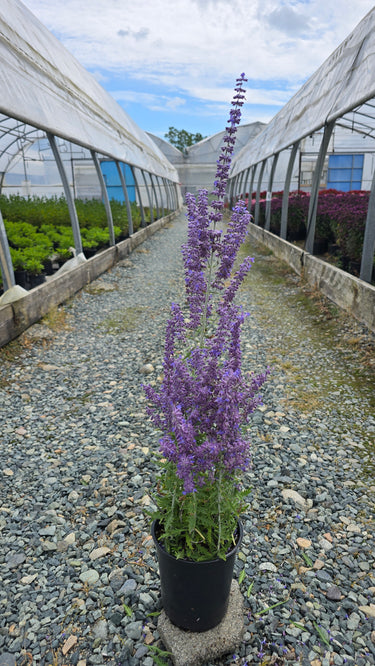

Blue Jean Baby Russian Sage
Compact Russian sage with intensely silver-white stems and soft lavender-blue flower spikes from midsummer through fall — a tidy well-behaved selection perfect for smaller borders and front placement. (Perovskia atriplicifolia 'Blue Jean Baby')
Perovskia atriplicifolia 'Blue Jean Baby', also known as Russian Sage, is a compact, early-blooming perennial that brings a vibrant splash of color to sunny gardens. Reaching 28–34 inches in height and spreading up to 36 inches, this variety boasts finely dissected, aromatic silver-green foliage that provides a soft, textured backdrop for its striking lavender-blue flowers. The blooms, held in smoky purple calyces, appear from mid-summer to early fall, offering extended seasonal interest even after the petals have fallen.
This cultivar's resilience to heat, drought, and poor soils, combined with its compact form and prolonged blooming period, make it a standout selection for gardeners seeking low-maintenance yet visually impactful plants. Whether used in cottage gardens, prairie-style landscapes, or contemporary designs, 'Blue Jean Baby' offers both aesthetic appeal and ecological benefits.
Your payment information is processed securely. We do not store credit card details nor have access to your credit card information.
Growing Information
Growing zone guideLearn more about this plant
Additional Information
| Growth Rate | |
|---|---|
| Colorful Leaves | Yes |
| Flowering | |
| Bloom Color | Purple & Lavender, Blue |
| Ornamental Berries | N/A |
| Disease resistant | |
| Cold Tolerant | |
| Heat Tolerant | |
| Drought Tolerant | |
| Deer Resistant | |
| Edible | |
| Wildlife Attraction | |
| Self-pollinating | Cross-pollinating |
| Seasonality | |
| Ideal For | |
| Leaf Description | |
| Flower Description | |
| Pruning & Maintenance | |
| Water Needs | |
| Light Needs | |
| Harvesting | |
| Fertilizing | |
| Additional Care Tips | N/A |
| Pollination | |
| Companion Plants |
Flowering and Seasonality
Pet Friendly
Yes
Growing Zone
- Zone 4
- Zone 5
- Zone 6
- Zone 7
- Zone 8
- Zone 9
Click to enlarge
Growing Zone

You may also like


