Growing Information

Growing zone guide
Growing Zone Zone 4, Zone 5, Zone 6, Zone 7, Zone 8
Sunlight Bright light
Type of Soil Slightly acidic to neutral
Mature Height 5 to 6 ft.
Maintenance Level Low maintenance
Water Requirement Moderate watering (once a week)

Learn more about this plant

Additional Information
Growth Rate

Moderate to fast, forming a dense, upright, arching shrub that matures over 3–4 years.

Colorful Leaves Yes
Flowering Yes
Bloom Color White , Pink
Ornamental Berries N/A
Disease resistant Yes
Cold Tolerant Yes
Heat Tolerant Yes
Drought Tolerant Yes
Deer Resistant Yes
Edible No
Wildlife Attraction

Flowers attract bees, butterflies, and other pollinators. The seed capsules may provide food for birds in late summer and fall, while the dense branching offers shelter for small wildlife.

Self-pollinating Cross-pollinating
Seasonality

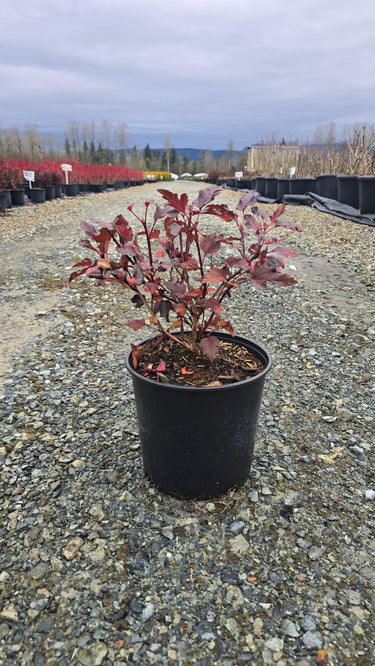
A deciduous shrub that provides multi-season interest: spring foliage emerges bronze-red, summer foliage remains deep purple, flowers appear late spring, and fall brings copper-red tones. In winter, its peeling bark reveals attractive cinnamon-colored layers that add texture to the landscape.

Ideal For

Shrub borders, foundation plantings, mixed beds, specimen plant, erosion control on slopes, and modern landscape contrast plantings

Leaf Description

Deeply lobed, maple-like leaves emerge orange-bronze in spring, mature to rich wine-purple, and develop hints of red and copper in fall. The foliage has a glossy texture and holds color exceptionally well throughout the season.

Flower Description

Produces clusters of small white to pink-tinged flowers in late spring to early summer (typically May to June). The flowers form rounded corymbs that contrast beautifully with the dark foliage and are followed by red, papery seed pods.

Pruning & Maintenance

Prune in late winter or early spring before new growth appears to shape the plant or remove damaged stems. After flowering, light pruning can help maintain form and encourage fresh growth with strong color. Every few years, rejuvenate by cutting back one-third of the oldest stems to the ground to keep the shrub vigorous. Avoid cutting into old wood too heavily, as this may reduce flowering the next season.

Water Needs

Keep soil moderately moist during establishment. Once established, it is fairly drought-tolerant, though it performs best with regular watering during prolonged dry spells. Avoid overly wet or compacted soils.

Light Needs

Thrives in full sun for the best leaf color and dense branching. It tolerates partial shade, but the purple foliage may appear greener with reduced sunlight.

Harvesting

The flower stems can be cut for fresh floral arrangements or dried decor. After pollination, small red seed capsules form, adding late-season interest before falling naturally.

Fertilizing

Feed in early spring with a balanced, slow-release fertilizer or a top dressing of compost. Avoid overfertilizing, as excessive nitrogen promotes weak growth and reduces foliage color intensity.

Additional Care Tips N/A
Pollination

Pollinated by insects, mainly bees. The small flowers are rich in nectar and attract a wide variety of pollinators. Produces small, red seed capsules after flowering that may self-sow lightly.

Companion Plants

Excellent paired with contrasting foliage and flowering plants such as Spiraea japonica, Hydrangea paniculata, Berberis thunbergii, Weigela florida, Perovskia atriplicifolia, and Panicum virgatum. It also works beautifully with silver or golden-leaved perennials like Sedum, Coreopsis, or Echinacea to create dynamic color combinations.

Flowering and Seasonality

A deciduous shrub that provides multi-season interest: spring foliage emerges bronze-red, summer foliage remains deep purple, flowers appear late spring, and fall brings copper-red tones. In winter, its peeling bark reveals attractive cinnamon-colored layers that add texture to the landscape.

Produces clusters of small white to pink-tinged flowers in late spring to early summer (typically May to June). The flowers form rounded corymbs that contrast beautifully with the dark foliage and are followed by red, papery seed pods.

Pet Friendly

Yes

Growing Zone
  • Zone 4
  • Zone 5
  • Zone 6
  • Zone 7
  • Zone 8

Click to enlarge