Growing Information

Growing zone guide
Growing Zone Zone 2, Zone 3, Zone 4, Zone 5, Zone 6
Sunlight Bright light
Type of Soil Acidic
Mature Height 40 to 60 feet
Maintenance Level Low maintenance
Water Requirement Low watering (once every 2 weeks)

Learn more about this plant

Additional Information
Growth Rate

  • Growth Rate: Slow to moderate growth rate, typically 12-24 inches per year under ideal conditions.
  • Mature Height: Can reach a mature height of 40-60 feet with a spread of 10-20 feet, depending on growing conditions and the specific variety.
Colorful Leaves No
Flowering No
Bloom Color N/A
Ornamental Berries N/A
Disease resistant No
Cold Tolerant Yes
Heat Tolerant No
Drought Tolerant No
Deer Resistant Yes
Edible No
Wildlife Attraction
  • Birds & Small Mammals: The seeds from the cones provide food for birds, such as crossbills, chickadees, and nuthatches, as well as small mammals like squirrels. The dense branches offer shelter and nesting sites for various wildlife.
  • Wildlife Resistant: Deer typically avoid White Spruce, making it a good choice for areas with heavy deer populations.
Self-pollinating Self-pollinating
Seasonality

White Spruce is monoecious, producing both male and female cones in late spring (May to June).

Ideal For

Windbreaks and Privacy Screens

  • Tall, dense branching provides year-round protection from wind, snow, and visual intrusions
  • Ideal for rural properties, farms, and open landscapes

Specimen or Focal Tree

  • Its narrow, pyramidal shape and soft blue-green foliage make it an excellent choice for showcasing in large lawns or open areas

Wildlife Habitat

  • Offers shelter and nesting for birds and small mammals
  • Female cones produce seeds that attract birds and squirrels

Reforestation and Naturalization

  • Native to North America and widely used in reclamation and reforestation projects
  • Thrives in poor, sandy, or rocky soils once established

Cold Climate Landscaping

  • Exceptionally hardy to Zone 2; withstands heavy snow and extreme cold without damage
  • Maintains attractive color and structure even in the harshest winters

Christmas Tree Farms

With symmetrical form and dense foliage, it is a popular choice for live or cut Christmas trees


Leaf Description

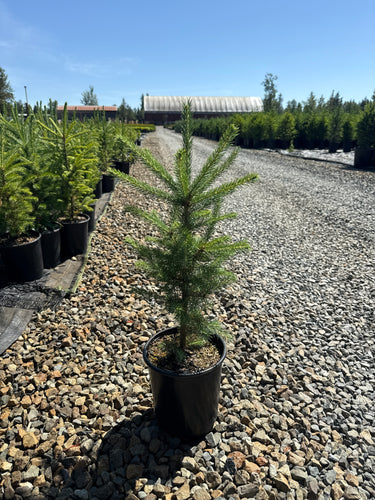
The needles of Picea glauca are short, stiff, and bluish-green, arranged radially around the branches. These aromatic needles remain on the tree year-round, giving it a classic evergreen appearance that adds color and texture to the landscape.

Flower Description
  • Flower Description: Male cones are small, reddish-brown, and found on the lower branches, while the female cones are green or purplish and located higher up on the tree. The cones mature into brown, cylindrical cones by late summer, providing seasonal interest.
  • Cones: Mature cones are about 1.5-2.5 inches long and drop in autumn, adding ornamental value.
Pruning & Maintenance

Minimal pruning is required. Prune in late winter or early spring to remove any dead, damaged, or diseased branches. For a more compact shape, light pruning can be done, but avoid heavy pruning as it can disrupt the tree's natural form.

Water Needs

Water regularly during the first few years to help establish a strong root system. Once established, Picea glauca is drought-tolerant but will benefit from occasional deep watering during prolonged dry periods.

Light Needs

Full sun is essential for optimal growth. The tree requires at least 6-8 hours of direct sunlight per day to maintain its dense, conical shape and healthy foliage.

Harvesting

While Picea glauca is not harvested for edible fruit, it does offer valuable decorative and ecological harvesting opportunities

Fertilizing

Fertilize in early spring with a balanced, slow-release fertilizer, especially if the soil is nutrient-poor. Avoid over-fertilizing, as White Spruce is not a heavy feeder.

Additional Care Tips
  • Pest & Disease: White Spruce is relatively pest- and disease-resistant but may occasionally suffer from issues like spruce budworm or aphids. Good air circulation and proper spacing can help prevent most problems.
  • Mulching: Apply a 2-3 inch layer of organic mulch around the base of the tree to help retain moisture, suppress weeds, and protect the roots from temperature fluctuations. Keep mulch away from the trunk to prevent rot.
  • Winter Care: No special winter care is needed, as White Spruce is highly cold-hardy (USDA Zones 2-6). In areas with heavy snow, avoid piling snow on the lower branches to prevent breakage.
Pollination
  • Pollination Method: White Spruce is wind-pollinated. The male cones release pollen, which fertilizes the female cones, resulting in seed production by late summer. The seeds are dispersed by wind or consumed by wildlife.
Companion Plants

Evergreen & Shrub Companions

  • Juniperus horizontalis ‘Blue Chip’ – Low-spreading blue foliage creates a textural and color contrast

  • Buxus sempervirens (Boxwood) – Adds formal structure beneath the airy canopy of mature spruce

  • Rhododendron or Azalea – Offers broadleaf contrast and spring bloom under partial shade of the lower branches

Perennials & Flowering Companions

  • Echinacea purpurea (Purple Coneflower) – Tall flowers add color and attract pollinators in open spaces near spruce

  • Lupinus perennis (Wild Lupine) – Adds vertical floral spikes and nitrogen enrichment to soil

  • Heuchera (Coral Bells) – Colorful foliage for shaded northern side or perimeter of spruce groupings

Grasses & Groundcovers

  • Festuca glauca ‘Elijah Blue’ – Compact grass echoes the spruce’s cool-toned needles

  • Pachysandra terminalis – Excellent evergreen groundcover for partial shade zones near spruce bases

  • Hosta spp. – Bold foliage contrast for the shadier side or north-facing edge of mature trees

Design Tip: Use contrasting textures (fine vs. broad-leaved), complementary colors (blue-green vs. purple or gold), and layered heights to frame your spruce beautifully while promoting biodiversity.

Flowering and Seasonality

White Spruce is monoecious, producing both male and female cones in late spring (May to June).

  • Flower Description: Male cones are small, reddish-brown, and found on the lower branches, while the female cones are green or purplish and located higher up on the tree. The cones mature into brown, cylindrical cones by late summer, providing seasonal interest.
  • Cones: Mature cones are about 1.5-2.5 inches long and drop in autumn, adding ornamental value.
Pet Friendly

Yes

Growing Zone
  • Zone 2
  • Zone 3
  • Zone 4
  • Zone 5
  • Zone 6

Click to enlarge