Growing Information

Growing zone guide
Growing Zone Zone 2, Zone 3, Zone 4, Zone 5, Zone 6, Zone 7
Sunlight Bright light
Type of Soil Slightly acidic to neutral
Mature Height 2 to 3 ft.
Maintenance Level Low maintenance
Water Requirement Low to moderate (once a week in hot climate, once every 2 weeks in regular climate)

Learn more about this plant

Additional Information
Growth Rate

Moderate; establishes steadily and forms a rounded mound.


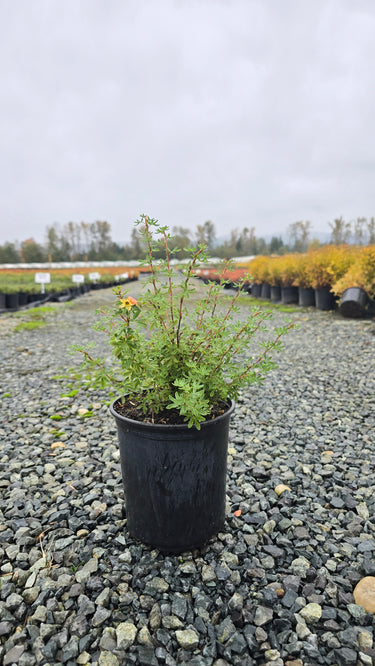
Mature size: about 2–3 feet tall and 3–4 feet wide with a dense, compact growth habit.

Colorful Leaves No
Flowering Yes
Bloom Color Orange , Red , Yellow
Ornamental Berries N/A
Disease resistant Yes
Cold Tolerant Yes
Heat Tolerant Yes
Drought Tolerant Yes
Deer Resistant Yes
Edible No
Wildlife Attraction

Flowers attract bees, butterflies, and other beneficial pollinators.


Offers low wildlife browsing—deer and rabbits typically avoid it.

Self-pollinating Self-pollinating
Seasonality

Spring: Emergence of new foliage; flowering begins.


Summer: Continuous bloom with bright orange-red flowers.


Fall: Final flowering flush; foliage may take on warm tones before dropping.


Winter: Woody stems remain; plant goes dormant but retains structure.

Ideal For

– Rock gardens, borders, mass plantings, foundation plantings, slopes, pollinator gardens, and low-maintenance landscapes

Leaf Description

Deciduous, fine-textured leaves are divided into narrow leaflets, medium to dark green in color.


Foliage provides soft texture and contrasts beautifully with the vivid flowers.


In cooler climates, leaves may turn yellowish-green before dropping in fall.


Flower Description

Large, vibrant orange-red blooms with golden-yellow centers.


Petals often display a gradient of orange tones, deepening toward the edges.


Flowers continuously from late spring through early fall, providing long-lasting color.


Each bloom is about 1–1.5 inches across and borne profusely along stems.

Pruning & Maintenance

Prune in early spring before new growth begins to shape and encourage dense branching.


Remove any dead, weak, or crossing stems to maintain form and airflow.


Light trimming after flowering can extend blooming and keep a neat appearance.


Rejuvenate older plants every 2–3 years by cutting back one-third of the oldest wood to the base.

Water Needs

Water regularly during the first growing season to establish roots.


Once established, highly drought tolerant, requiring only occasional deep watering during extended dry periods.


Avoid waterlogged soils—Potentilla prefers well-drained conditions.

Light Needs

Performs best in full sun (6+ hours daily) for maximum flowering and compact growth.


Tolerates light partial shade, especially in hotter climates, but may flower less abundantly.

Harvesting

Produces tiny seed heads after flowering; fruits are small and inconspicuous.


Not grown for fruit; seeds can be collected for propagation if desired.


Best propagated through softwood cuttings in early summer or division in spring.

Fertilizing

Generally low nutrient needs; over-fertilizing can reduce flower production.


Apply a balanced, slow-release fertilizer (10-10-10) in early spring if soil is poor.


A topdressing of compost once a year is usually sufficient.

Additional Care Tips N/A
Pollination

Insect-pollinated, mainly by bees, butterflies, and hoverflies.


Flowers are self-fertile but primarily valued for ornamental bloom rather than fruit production.

Companion Plants

Shrubs: Spiraea japonica, Berberis thunbergii, and Juniperus horizontalis for contrast and texture.


Perennials: Coreopsis, Echinacea, and Salvia complement the orange blooms beautifully.


Grasses: Festuca glauca or Pennisetum alopecuroides for fine texture and color contrast.


Works well in rock gardens, borders, or as a low-maintenance landscape foundation plant.

Flowering and Seasonality

Spring: Emergence of new foliage; flowering begins.


Summer: Continuous bloom with bright orange-red flowers.


Fall: Final flowering flush; foliage may take on warm tones before dropping.


Winter: Woody stems remain; plant goes dormant but retains structure.

Large, vibrant orange-red blooms with golden-yellow centers.


Petals often display a gradient of orange tones, deepening toward the edges.


Flowers continuously from late spring through early fall, providing long-lasting color.


Each bloom is about 1–1.5 inches across and borne profusely along stems.

Pet Friendly

Yes

Growing Zone
  • Zone 2
  • Zone 3
  • Zone 4
  • Zone 5
  • Zone 6
  • Zone 7

Click to enlarge