Growing Information

Growing zone guide
Growing Zone Zone 4, Zone 5, Zone 6, Zone 7, Zone 8
Sunlight Bright light
Type of Soil Slightly acidic to neutral
Mature Height 2 to 3 ft.
Maintenance Level Moderate maintenance
Water Requirement Moderate watering (once a week)

Learn more about this plant

Additional Information
Growth Rate
  • Average Growth Rate: Moderate, typically growing about 12 to 24 inches per year.
  • Mature Height: Reaches about 3 to 4 feet.
  • Mature Width: Spreads to around 3 to 5 feet, creating a full and bushy appearance.
Colorful Leaves Yes
Flowering Yes
Bloom Color Pink , Red
Ornamental Berries N/A
Disease resistant Yes
Cold Tolerant Yes
Heat Tolerant Yes
Drought Tolerant No
Deer Resistant Yes
Edible No
Wildlife Attraction

'Minor Black' attracts various pollinators, including bees and butterflies, thanks to its abundant flowers. Birds may also visit to feed on the seeds produced after flowering.

Self-pollinating Self-pollinating
Seasonality
  • Foliage Season: Evergreen (year-round foliage).
  • Flowering Season: No significant flowers; primarily valued for foliage.
  • Hardiness Zones: USDA Zones 3-7
Ideal For

Borders, foundation plantings, and containers. Enhance your garden with the striking beauty of Weigela 'Minor Black'!

Leaf Description

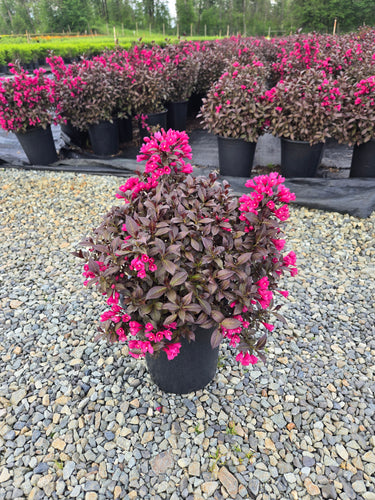
The leaves are deep purple to almost black, providing a dramatic backdrop for the bright pink flowers. They are oval-shaped and create a lush, full appearance.

Flower Description

The flowers are trumpet-shaped, bright pink, and arranged in clusters. Their vibrant color contrasts beautifully with the dark foliage, attracting attention and pollinators alike.

Pruning & Maintenance

Prune after flowering to shape the plant and remove any dead or damaged branches. A light pruning can also encourage denser growth. The best time to prune is in late spring or early summer.

Water Needs
  • Frequency: Water regularly during the first year to establish roots, then water weekly during dry spells.
  • Amount: Keep the soil evenly moist but avoid waterlogging.
Light Needs

Weigela 'Minor Black' thrives in full sun to partial shade, preferring at least 6 hours of sunlight each day for optimal growth and flowering.

Harvesting

Not applicable, as this plant is primarily ornamental and not harvested for any products.

Fertilizing

Fertilize in early spring with a balanced, slow-release fertilizer to support vigorous growth and abundant flowering.

Additional Care Tips
  • Pests: Generally resistant to pests, but watch for common issues like aphids and spider mites.
  • Diseases: Susceptible to root rot in poorly drained soils; ensure good drainage.
Pollination

Weigela 'Minor Black' is primarily insect-pollinated, attracting bees and butterflies to its vibrant blooms.

Companion Plants

Foliage Contrast Companions:

  • Spiraea 'Goldmound' or 'Magic Carpet' – Vibrant golden foliage contrasts beautifully with the dark leaves of Weigela.
  • Heuchera 'Lime Rickey' or 'Caramel' – Bright or warm-toned foliage adds color balance beneath the shrub.
  • Hosta 'Patriot' or 'Sum and Substance' – Adds bold texture and light foliage contrast in partial shade.
  • Hakonechloa macra 'Aureola' (Japanese Forest Grass) – Graceful, variegated foliage adds motion and color contrast.

Flowering Companions:

  • Salvia nemorosa 'Caradonna' – Deep purple flower spikes echo Weigela’s dark foliage while contrasting the pink blooms.
  • Geranium 'Rozanne' – Long-blooming, mounding plant with violet-blue flowers pairs well with Weigela's upright form.
  • Coreopsis verticillata 'Moonbeam' – Fine-textured foliage and soft yellow flowers add a light, airy complement.
  • Nepeta 'Walker's Low' – Lavender-blue flowers soften Weigela’s bold foliage and attract pollinators.

Structure & Seasonal Interest:

  • Boxwood (Buxus spp.) – Evergreen structure that adds year-round formality beneath or beside Weigela.
  • Pennisetum alopecuroides (Fountain Grass) – Adds flowing movement and late-season interest.
  • Sedum 'Autumn Joy' – Succulent foliage and fall-blooming pink flowers complement the seasonal transition.
Flowering and Seasonality
  • Foliage Season: Evergreen (year-round foliage).
  • Flowering Season: No significant flowers; primarily valued for foliage.
  • Hardiness Zones: USDA Zones 3-7

The flowers are trumpet-shaped, bright pink, and arranged in clusters. Their vibrant color contrasts beautifully with the dark foliage, attracting attention and pollinators alike.

Pet Friendly

Yes

Growing Zone
  • Zone 4
  • Zone 5
  • Zone 6
  • Zone 7
  • Zone 8

Click to enlarge