
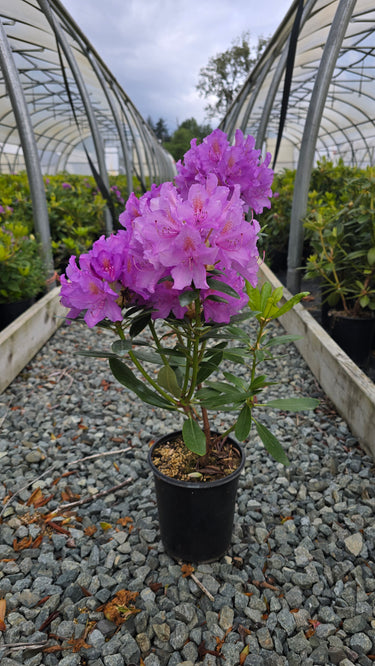

Holden Rhododendron
Rich rose-red blooms with darker spotting in late spring make Holden one of the most intensely coloured and cold-hardy mid-size rhododendrons for sheltered garden and woodland borders. (Rhododendron hybrid 'Holden')
Rhododendron 'Holden' is a compact, evergreen shrub known for its stunning clusters of rose-pink blooms with deep reddish spotting that appear in late spring. With its neat, rounded form and glossy green foliage, this variety adds vibrant color and structure to shaded borders, woodland gardens, and foundation plantings. Hardy, reliable, and low maintenance, 'Holden' thrives in acidic soil and partial shade, making it a beautiful choice for cool-climate landscapes.
Your payment information is processed securely. We do not store credit card details nor have access to your credit card information.
Growing Information
Growing zone guideLearn more about this plant
Additional Information
| Growth Rate | |
|---|---|
| Colorful Leaves | No |
| Flowering | |
| Bloom Color | Pink |
| Ornamental Berries | N/A |
| Disease resistant | |
| Cold Tolerant | |
| Heat Tolerant | |
| Drought Tolerant | |
| Deer Resistant | |
| Edible | |
| Wildlife Attraction | |
| Self-pollinating | Self-pollinating |
| Seasonality | |
| Ideal For | |
| Leaf Description | |
| Flower Description | |
| Pruning & Maintenance | |
| Water Needs | |
| Light Needs | |
| Harvesting | |
| Fertilizing | |
| Additional Care Tips | N/A |
| Pollination | |
| Companion Plants |
Flowering and Seasonality
Pet Friendly
No
Growing Zone
- Zone 5
- Zone 6
- Zone 7
- Zone 8
Click to enlarge
Growing Zone

You may also like


