Growing Information

Growing zone guide
Growing Zone Zone 5, Zone 6, Zone 7, Zone 8
Sunlight Partial shade
Type of Soil Acidic
Mature Height 4 to 5 ft.
Maintenance Level Moderate maintenance
Water Requirement Moderate watering (once a week)

Learn more about this plant

Additional Information
Growth Rate

Moderate; develops into a broad, rounded shrub over time.


Mature size: approximately 4–5 feet tall and 5–6 feet wide.

Colorful Leaves Yes
Flowering Yes
Bloom Color Pink , Yellow
Ornamental Berries N/A
Disease resistant Yes
Cold Tolerant Yes
Heat Tolerant No
Drought Tolerant No
Deer Resistant No
Edible No
Wildlife Attraction

Bees, butterflies, and hummingbirds are drawn to its nectar-rich blooms.


Foliage is deer resistant, though young plants may need protection.


Provides shelter for small birds within its dense branching.

Self-pollinating Self-pollinating
Seasonality

Spring: Profuse pink bloom display; new leaf growth emerges bright green.


Summer: Deep green foliage provides lush garden structure.


Fall: Evergreen foliage remains vibrant; occasional bronze tint in cooler temperatures.


Winter: Retains foliage, offering structure and color in the cold months.

Ideal For

– Woodland gardens, shaded borders, foundation plantings, and naturalized landscapes with acid soil

Leaf Description

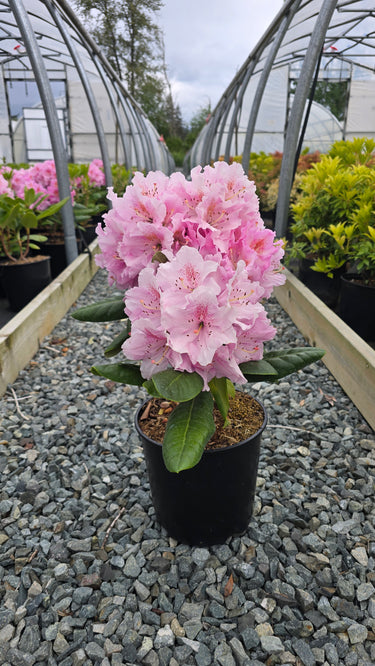
Evergreen leaves, elliptical and leathery in texture.


Deep, glossy green with a smooth surface and slightly paler underside.


Foliage remains attractive year-round, forming a lush, dense canopy.

Flower Description

Large trusses of soft pink flowers with a light yellow throat, each bloom about 2–3 inches across.


Flowers are slightly ruffled and appear in clusters of 10–15 blooms per truss.


Blossoms are lightly fragrant and appear in mid to late spring.


Contrasts beautifully with the glossy evergreen foliage.

Pruning & Maintenance

Prune immediately after flowering to avoid removing next year’s buds.


Remove spent flower clusters (deadhead) to promote new growth and maintain plant vigor.


Lightly shape to maintain a rounded form; avoid heavy pruning into old wood.


Remove any dead or damaged branches as needed.

Water Needs

Requires consistent moisture, especially during dry spells.


Water deeply once or twice a week; keep soil evenly moist but never waterlogged.


Mulch helps conserve soil moisture and maintain cool root conditions.

Light Needs

Prefers partial shade or filtered sunlight, such as morning sun with afternoon shade.


In cooler climates, can tolerate more sun if soil remains moist.


Avoid hot, dry, or windy exposures which can scorch foliage.

Harvesting

Produces small, brown seed capsules in late summer after flowering.


Fruits are not ornamental and not edible.


Seeds can be collected for propagation, though cuttings are preferred for true-to-type growth.


Deadheading spent flowers before seeds form helps conserve plant energy.

Fertilizing

Feed once in early spring after flowering using an acidic, slow-release fertilizer (e.g., 10-8-6 for azaleas and rhododendrons).


Avoid fertilizers high in nitrogen, as they encourage foliage over flowers.


Apply compost or organic mulch yearly to enrich soil and maintain acidity.

Additional Care Tips N/A
Pollination

Insect-pollinated; mainly by bees and butterflies.


Flowers are self-fertile but can cross-pollinate with other rhododendron varieties.


Produces small seed capsules after flowering, though this hybrid is primarily propagated by cuttings.

Companion Plants

Evergreens: Pieris japonica, Ilex crenata, or Azalea varieties for similar soil and light needs.


Perennials: Hosta, Heuchera, Ferns, and Astilbe to complement its texture and color.


Shrubs: Kalmia latifolia, Hydrangea quercifolia, or Fothergilla for multi-season appeal.


Ideal in woodland gardens, shaded borders, or foundation plantings with other acid-loving plants.

Flowering and Seasonality

Spring: Profuse pink bloom display; new leaf growth emerges bright green.


Summer: Deep green foliage provides lush garden structure.


Fall: Evergreen foliage remains vibrant; occasional bronze tint in cooler temperatures.


Winter: Retains foliage, offering structure and color in the cold months.

Large trusses of soft pink flowers with a light yellow throat, each bloom about 2–3 inches across.


Flowers are slightly ruffled and appear in clusters of 10–15 blooms per truss.


Blossoms are lightly fragrant and appear in mid to late spring.


Contrasts beautifully with the glossy evergreen foliage.

Pet Friendly

No

Growing Zone
  • Zone 5
  • Zone 6
  • Zone 7
  • Zone 8

Click to enlarge