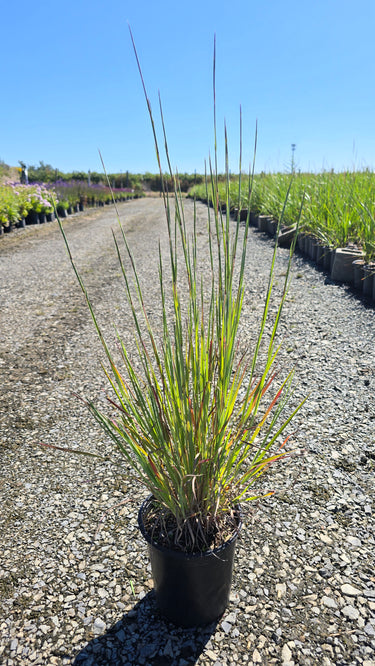
Growing Information

Growing zone guide
Growing Zone Zone 3, Zone 4, Zone 5, Zone 6, Zone 7, Zone 8, Zone 9
Sunlight Bright light
Type of Soil Slightly acidic to neutral
Mature Height 3 to 4 ft.
Maintenance Level Low maintenance
Water Requirement Moderate watering (once a week)

Learn more about this plant

Additional Information
Growth Rate
  • Growth Rate: Moderate, with the grass reaching its full height within 2-3 growing seasons.
  • Mature Growth: At maturity, Purple Arrow® reaches 3-4 feet in height and 1.5-2 feet in width, forming a dense, upright clump that adds height and vertical interest to garden beds or mixed plantings.
Colorful Leaves Yes
Flowering No
Bloom Color N/A
Ornamental Berries N/A
Disease resistant Yes
Cold Tolerant Yes
Heat Tolerant Yes
Drought Tolerant Yes
Deer Resistant Yes
Edible No
Wildlife Attraction

The flowers of Purple Arrow® attract pollinators, including bees and butterflies, while the seed heads provide food for birds in fall and winter. The dense foliage also offers shelter for small insects and animals, making it a valuable addition to wildlife-friendly gardens.

Self-pollinating Self-pollinating
Seasonality

This warm-season grass emerges in late spring, begins flowering in late summer to early fall, and holds its vibrant purple and red tones into late fall. Winter interest is maintained through its upright, bronzed seed heads and foliage structure.

Ideal For

Excellent for naturalistic plantings, xeriscaping, and prairie gardens

– Striking in mass plantings or mixed borders

– Ideal for erosion control and pollinator gardens

Leaf Description

The standout feature of Purple Arrow® is its bold, upright foliage that starts with a stunning purple-blue hue in spring and summer. As the season progresses, the foliage deepens to shades of purple, red, orange, and bronze in the fall, creating a dramatic display of color. Its vertical, clumping form adds structure and height to the garden.

Flower Description
  • Flowering Season: Late summer to early fall (August to October).
  • Flower Description: In late summer, Purple Arrow® produces delicate, feathery seed heads that are silvery-white and rise above the foliage on tall, slender stems. These airy flower panicles add a soft, cloud-like texture to the garden and persist into fall, providing additional interest and movement.
Pruning & Maintenance

In late winter or early spring, cut back the foliage to about 4-6 inches above ground level before new growth begins. This rejuvenates the plant and keeps it looking tidy. The dried foliage and seed heads can be left standing through the winter for added texture and wildlife shelter.

Water Needs

This grass is highly drought-tolerant once established and requires minimal supplemental watering. Water regularly during the first growing season to help establish a strong root system. After establishment, occasional watering during extended dry periods is sufficient. Avoid overwatering, as Purple Arrow® prefers dry to moderately moist soil conditions.

Light Needs

Full sun is essential for optimal growth and color development. Purple Arrow® performs best in bright sunlight and needs at least 6 hours of direct sunlight per day. In shaded conditions, the foliage may lose its vibrant purple hue, and the plant may become leggy.

Harvesting

Typically not harvested for floral or culinary use. However, seed heads can be collected in fall if propagation is desired. Allow seeds to dry on the plant, then gently shake or hand-strip into a paper bag. Cut back dead stems in late winter or early spring before new growth emerges.

Fertilizing

Fertilize sparingly in early spring with a light application of compost or a balanced, slow-release fertilizer. Purple Arrow® thrives in poor soils and does not require heavy feeding. Avoid over-fertilizing, as it can lead to overly lush growth that may cause the plant to lose its upright form.

Additional Care Tips
  • Mulching: Apply a 2-3 inch layer of organic mulch, such as compost or bark, around the base of the plant to help retain moisture, regulate soil temperature, and suppress weeds. Mulching is especially beneficial during the first year to help establish the plant.

  • Winter Care: Purple Arrow® is fully hardy in USDA Zones 4-9 and requires no special winter protection. The dried seed heads and foliage can be left standing through the winter for added interest and wildlife support.

  • Pest and Disease Resistance: This grass is highly resistant to pests and diseases, making it a low-maintenance option for most gardens. Ensure proper drainage and avoid overly wet conditions to prevent root rot.
Pollination

The wind-pollinated flowers of Purple Arrow® attract beneficial insects, including butterflies and bees. The seed heads provide food for birds in late fall and winter, making this grass an excellent choice for supporting local wildlife. The dense clumps of foliage also offer shelter for small insects and animals.

Companion Plants

Schizachyrium scoparium 'Purple Arrow' pairs beautifully with drought-tolerant, sun-loving perennials and grasses such as Echinacea (Coneflowers), Rudbeckia (Black-eyed Susan), Salvia, Coreopsis, Panicum virgatum (Switchgrass), Gaillardia (Blanket Flower), and Sedum (Stonecrop). For shrubs, consider pairing with Aronia, Potentilla, or dwarf Spiraea cultivars.

Flowering and Seasonality

This warm-season grass emerges in late spring, begins flowering in late summer to early fall, and holds its vibrant purple and red tones into late fall. Winter interest is maintained through its upright, bronzed seed heads and foliage structure.

  • Flowering Season: Late summer to early fall (August to October).
  • Flower Description: In late summer, Purple Arrow® produces delicate, feathery seed heads that are silvery-white and rise above the foliage on tall, slender stems. These airy flower panicles add a soft, cloud-like texture to the garden and persist into fall, providing additional interest and movement.
Pet Friendly

Yes

Growing Zone
  • Zone 3
  • Zone 4
  • Zone 5
  • Zone 6
  • Zone 7
  • Zone 8
  • Zone 9

Click to enlarge