
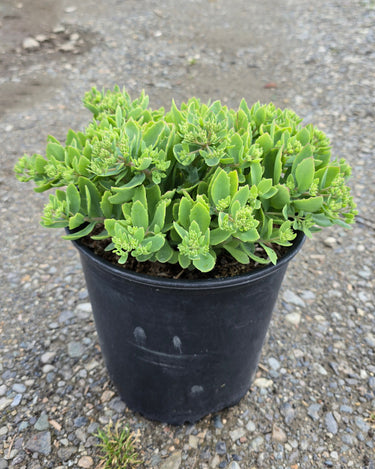

Powderpuff Stonecrop
Unique fluffy powderpuff-like pink flower heads bloom in late summer on compact succulent foliage — a distinctive and charming sedum selection offering an unusual floral texture in sunny borders. (Sedum hybrid 'Powderpuff' PP32714)
Sedum hybrid 'Powderpuff' PP32714 is a delightful low-growing perennial known for its compact form and uniquely soft, pink, dome-shaped blooms that resemble puffs of powder. It creates a dense cushion of blue-green succulent foliage and erupts in late summer with an abundance of fluffy, cotton-pink flower clusters, adding texture and charm to dry, sunny garden spots.
Unlike taller sedums, 'Powderpuff' remains neat and contained, making it ideal for small spaces, containers, and rock gardens. Its drought resistance and pollinator value enhance its practical appeal, while its distinctive blooms provide late-season color and visual softness in full sun locations. An exceptional choice for gardeners seeking a small-scale yet eye-catching sedum.
Your payment information is processed securely. We do not store credit card details nor have access to your credit card information.
Growing Information
Growing zone guideLearn more about this plant
Additional Information
| Growth Rate | |
|---|---|
| Colorful Leaves | Yes |
| Flowering | |
| Bloom Color | Pink |
| Ornamental Berries | N/A |
| Disease resistant | |
| Cold Tolerant | |
| Heat Tolerant | |
| Drought Tolerant | |
| Deer Resistant | |
| Edible | |
| Wildlife Attraction | |
| Self-pollinating | Self-pollinating |
| Seasonality | |
| Ideal For | |
| Leaf Description | |
| Flower Description | |
| Pruning & Maintenance | |
| Water Needs | |
| Light Needs | |
| Harvesting | |
| Fertilizing | |
| Additional Care Tips | N/A |
| Pollination | |
| Companion Plants |
Flowering and Seasonality
Pet Friendly
Yes
Growing Zone
- Zone 4
- Zone 5
- Zone 6
- Zone 7
- Zone 8
- Zone 9
Click to enlarge
Growing Zone

You may also like


