
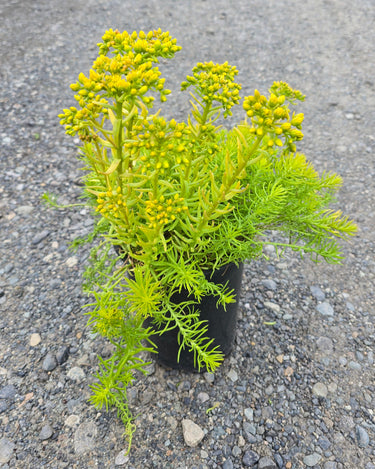

Sundance Stonecrop
Golden-yellow needle-like succulent foliage glows in the sun and turns warm orange in fall — a cheerful spreading groundcover sedum that brightens sunny rock gardens, slopes, and borders. (Sedum reflexum Sundance)
Sedum reflexum Sundance® ('Noecnadln') PPAF is a vibrant, fast-growing stonecrop prized for its brilliant golden-chartreuse foliage and sunny yellow blooms. This low, mat-forming perennial offers season-long color in the garden, and its evergreen (or semi-evergreen) nature ensures interest even through winter. In full sun, the foliage intensifies to a glowing lemon-lime, while in cooler months it may pick up warm copper tones.
Perfect for rock gardens, green roofs, containers, and sunny groundcover applications, Sundance® is as tough as it is beautiful—thriving in dry, nutrient-poor conditions while providing pollinator support and excellent texture. It’s a bright, reliable performer in any drought-tolerant design.
Your payment information is processed securely. We do not store credit card details nor have access to your credit card information.
Growing Information
Growing zone guideLearn more about this plant
Additional Information
| Growth Rate | |
|---|---|
| Colorful Leaves | Yes |
| Flowering | |
| Bloom Color | Yellow |
| Ornamental Berries | N/A |
| Disease resistant | |
| Cold Tolerant | |
| Heat Tolerant | |
| Drought Tolerant | |
| Deer Resistant | |
| Edible | |
| Wildlife Attraction | |
| Self-pollinating | Self-pollinating |
| Seasonality | |
| Ideal For | |
| Leaf Description | |
| Flower Description | |
| Pruning & Maintenance | |
| Water Needs | |
| Light Needs | |
| Harvesting | |
| Fertilizing | |
| Additional Care Tips | N/A |
| Pollination | |
| Companion Plants |
Flowering and Seasonality
Pet Friendly
Yes
Growing Zone
- Zone 4
- Zone 5
- Zone 6
- Zone 7
- Zone 8
- Zone 9
Click to enlarge
Growing Zone

You may also like


