
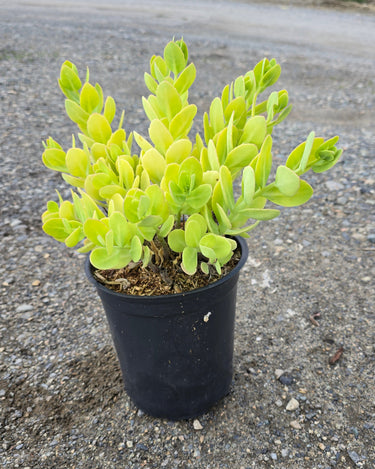

Neon Lights Stonecrop
Brilliant vivid magenta-pink flower heads light up the late summer garden above blue-green succulent foliage — one of the most electrically coloured Cakewalk series sedums for sunny borders. (Sedum spectabile Cakewalk Neon Lights)
Sedum spectabile Cakewalk® Neon Lights® ('Nonsthgi') is a showy upright stonecrop known for its vibrant neon-pink flower clusters that light up the late-season garden. Blooming from late summer into fall, this clump-forming perennial delivers bold color and sturdy structure, with strong stems that hold up even in wind and rain. Its blue-green succulent foliage adds texture and contrast throughout the growing season.
Perfect for borders, rock gardens, and low-maintenance designs, Cakewalk® Neon Lights® combines intense ornamental value with pollinator support and drought resilience. Whether planted en masse or used as an accent, this cultivar offers long-lasting beauty in sun-drenched landscapes.
Your payment information is processed securely. We do not store credit card details nor have access to your credit card information.
Growing Information
Growing zone guideLearn more about this plant
Additional Information
| Growth Rate | |
|---|---|
| Colorful Leaves | Yes |
| Flowering | |
| Bloom Color | Pink |
| Ornamental Berries | N/A |
| Disease resistant | |
| Cold Tolerant | |
| Heat Tolerant | |
| Drought Tolerant | |
| Deer Resistant | |
| Edible | |
| Wildlife Attraction | |
| Self-pollinating | Self-pollinating |
| Seasonality | |
| Ideal For | |
| Leaf Description | |
| Flower Description | |
| Pruning & Maintenance | |
| Water Needs | |
| Light Needs | |
| Harvesting | |
| Fertilizing | |
| Additional Care Tips | N/A |
| Pollination | |
| Companion Plants |
Flowering and Seasonality
Pet Friendly
Yes
Growing Zone
- Zone 4
- Zone 5
- Zone 6
- Zone 7
- Zone 8
- Zone 9
Click to enlarge
Growing Zone

You may also like


