
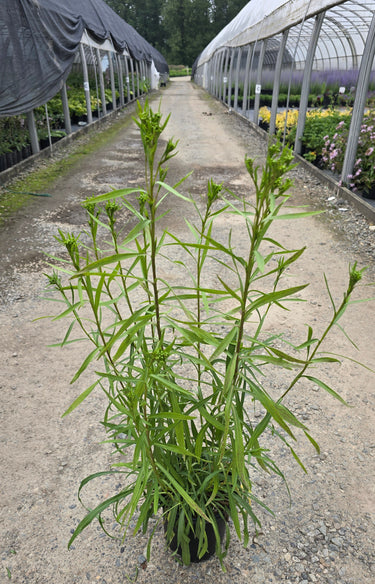

Sugar Kisses Goldenrod
Compact non-invasive goldenrod with dense clusters of bright golden-yellow flowers from late summer through fall — a better-behaved garden goldenrod that won't spread aggressively while feeding late-season pollinators. (Solidago hybrid 'Sugar Kisses' PP34747)
Solidago hybrid 'Sugar Kisses' PP34747 is a standout selection among goldenrods for its soft blush-pink blooms—a refined twist on a typically golden-hued genus. Compact and upright in form, it produces elegant plume-like flower heads from late summer into fall, offering both unique ornamental value and important forage for late-season pollinators. Its disease-resistant foliage and strong stems maintain a clean, tidy appearance throughout the growing season.
Perfect for sunny borders, native plantings, and pollinator-focused gardens, ‘Sugar Kisses’ combines unexpected beauty with ecological function. It is both tough and graceful, offering subtle color when most other perennials have faded.
Your payment information is processed securely. We do not store credit card details nor have access to your credit card information.
Growing Information
Growing zone guideLearn more about this plant
Additional Information
| Growth Rate | |
|---|---|
| Colorful Leaves | No |
| Flowering | |
| Bloom Color | Yellow |
| Ornamental Berries | N/A |
| Disease resistant | |
| Cold Tolerant | |
| Heat Tolerant | |
| Drought Tolerant | |
| Deer Resistant | |
| Edible | |
| Wildlife Attraction | |
| Self-pollinating | Self-pollinating |
| Seasonality | |
| Ideal For | |
| Leaf Description | |
| Flower Description | |
| Pruning & Maintenance | |
| Water Needs | |
| Light Needs | |
| Harvesting | |
| Fertilizing | |
| Additional Care Tips | N/A |
| Pollination | |
| Companion Plants |
Flowering and Seasonality
Pet Friendly
Yes
Growing Zone
- Zone 4
- Zone 5
- Zone 6
- Zone 7
- Zone 8
Click to enlarge
Growing Zone

You may also like


