Growing Information

Growing zone guide
Growing Zone Zone 4, Zone 5, Zone 6, Zone 7, Zone 8
Sunlight Bright light to partial shade
Type of Soil Slightly acidic to neutral
Mature Height 2 to 3 feet
Maintenance Level Low maintenance
Water Requirement Low watering (once every 2 weeks)

Learn more about this plant

Additional Information
Growth Rate

  • Moderate growth rate, with plants reaching their mature size within 2-3 years.
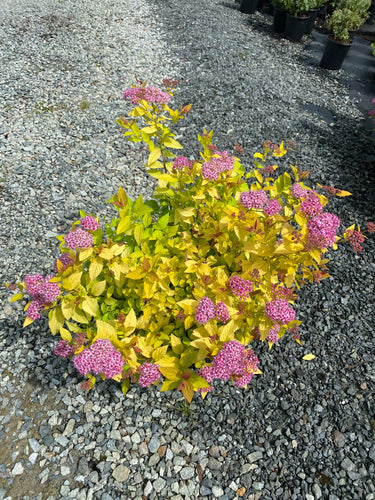
  • Grows 2-3 feet tall with a spread of 3-4 feet, forming a neat, rounded mound ideal for borders or foundation plantings.
Colorful Leaves Yes
Flowering Yes
Bloom Color Pink
Ornamental Berries N/A
Disease resistant Yes
Cold Tolerant Yes
Heat Tolerant Yes
Drought Tolerant Yes
Deer Resistant Yes
Edible No
Wildlife Attraction
  • Pollinators: The nectar-rich flowers attract bees, butterflies, and other pollinators, supporting biodiversity in your garden.
  • Wildlife Resistant: 'Goldmound' is generally resistant to deer and rabbits, making it a great choice for wildlife-prone areas.
Self-pollinating Cross-pollinating
Seasonality

'Goldmound' blooms from late spring to early summer (May to June), with clusters of small, bright pink flowers that contrast beautifully with the golden foliage.

Ideal For
  • Foundation Planting: Its neat, mounded shape and bright chartreuse foliage make it ideal near buildings or entryways.
  • Low Hedges and Borders: Perfect for edging pathways or defining garden beds with vibrant color.
  • Mass Planting: Provides a consistent and striking effect when planted in groups.
  • Accent or Specimen Plant: Foliage color makes it stand out as a focal point in mixed beds.
  • Pollinator Gardens: Attracts bees and butterflies with its soft pink summer blooms.
  • Mixed Shrub Borders: Pairs beautifully with darker-leaved or flowering shrubs.
  • Small Gardens: Compact size makes it ideal for urban or limited spaces.
  • Container Gardening: Suitable for large pots or decorative planters with regular watering.

Leaf Description

The foliage is golden-yellow and holds its color throughout the growing season, adding a vibrant splash of color to the garden. New leaves may emerge with a soft, reddish tinge in spring. In fall, the leaves can turn a light yellow before dropping.

Flower Description

The pink flowers form flat-topped clusters, each measuring about 4-6 inches wide. While the flowers are a stunning highlight, the real star is the golden foliage that lasts all season.

Pruning & Maintenance

Prune in late winter or early spring to maintain shape and size. Remove any dead or damaged branches and thin out older growth to encourage new growth and air circulation. Deadheading spent flowers can encourage a second flush of blooms.

Water Needs

Water regularly during the first growing season to establish a deep root system. Once established, 'Goldmound' is moderately drought-tolerant but performs best with consistent moisture, especially during dry spells. Avoid overwatering, as this shrub prefers moist but well-drained soils.

Light Needs


Full sun is essential for the best foliage color and flowering. For optimal performance, plant in a location that receives at least 6 hours of direct sunlight per day. 'Goldmound' can tolerate partial shade, but the leaf color may fade in too much shade.

Harvesting

Seed Harvesting: The plant produces small seed capsules after flowering. Allow them to dry on the plant in late summer or early fall, then collect and store seeds in a cool, dry place.

Cut Flower Use: While not a traditional cut flower, the flowering stems can be snipped and used in informal garden arrangements.

Pruning for Shape and Health: Prune lightly after flowering to shape the shrub and encourage fresh foliage and potential rebloom.

Foliage Harvest (Decorative Use): The golden foliage can be clipped for seasonal arrangements, especially in spring when color is most vivid.

Fertilizing

Apply a balanced, slow-release fertilizer in early spring to encourage healthy growth and abundant flowering. Over-fertilization is unnecessary, especially if planted in rich soils.

Additional Care Tips
  • Pest & Disease: 'Goldmound' is resistant to most pests and diseases but may occasionally experience aphids or spider mites. If pests are detected, treat with insecticidal soap or neem oil. The plant is generally disease-free, though proper air circulation helps prevent issues like powdery mildew.
  • Mulching: Apply a 2-3 inch layer of mulch around the base of the plant to help retain moisture, suppress weeds, and protect the roots from temperature extremes. Avoid piling mulch directly against the stem to prevent rot.
  • Winter Care: Hardy in USDA Zones 4-8. 'Goldmound' requires no special winter care, though applying mulch in colder zones can protect the roots during freezing temperatures.
  • Dividing: Not necessary for this shrub. If desired, it can be propagated by cuttings or division in early spring or fall to create new plants.
Pollination

The small, pink flowers attract a variety of pollinators, including bees and butterflies. While the plant is self-fertile, it benefits from the activity of pollinators, ensuring a vibrant display of blooms.

Companion Plants

Berberis thunbergii ‘Concorde’ – deep purple foliage contrasts beautifully with gold.

Salvia nemorosa – spiky purple blooms add height and texture.

Nepeta faassenii (Catmint) – soft lavender-blue flowers complement spirea’s pink.

Coreopsis verticillata ‘Zagreb’ – yellow blooms echo the gold foliage while adding flower form contrast.

Festuca glauca – cool-toned ornamental grasses provide color and texture balance.

Potentilla fruticosa – low-growing and blooms in a variety of complementary colors.

Hemerocallis (Daylilies) – their bold blooms enhance midsummer interest.

Echinacea purpurea – tall, daisy-like flowers add pollinator appeal and vertical contrast.

Flowering and Seasonality

'Goldmound' blooms from late spring to early summer (May to June), with clusters of small, bright pink flowers that contrast beautifully with the golden foliage.

The pink flowers form flat-topped clusters, each measuring about 4-6 inches wide. While the flowers are a stunning highlight, the real star is the golden foliage that lasts all season.

Pet Friendly

Yes

Growing Zone
  • Zone 4
  • Zone 5
  • Zone 6
  • Zone 7
  • Zone 8

Click to enlarge