Growing Information

Growing zone guide
Growing Zone Zone 2, Zone 3, Zone 4, Zone 5, Zone 6, Zone 7
Sunlight Bright light to partial shade
Type of Soil Acidic to neutral
Mature Height 3 to 6 ft.
Maintenance Level Low maintenance
Water Requirement Moderate watering (once a week)

Learn more about this plant

Additional Information
Growth Rate

Moderate to fast-growing

– Reaches 3–6 feet tall and wide, forming thickets via suckering

– Can spread rapidly in favorable conditions

Colorful Leaves No
Flowering Yes
Bloom Color White , Pink
Ornamental Berries White berries
Disease resistant Yes
Cold Tolerant Yes
Heat Tolerant Yes
Drought Tolerant Yes
Deer Resistant No
Edible No
Wildlife Attraction

Flowers attract bees, butterflies, and other pollinators

Berries are eaten by birds, especially grouse, quail, and robins

– Provides cover and nesting habitat for small birds and mammals

– Larval host plant for some moth and butterfly species

Self-pollinating Cross-pollinating
Seasonality

Spring: New leaf emergence and flowering

Summer: Foliage matures; fruit begins forming

Fall: Snow-white berries persist after leaves fall

Winter: Bare stems with decorative white berries, often lasting into early winter

Ideal For

– Naturalized and woodland plantings – erosion control – wildlife habitat – restoration projects – informal hedges – native plant gardens – winter interest

Leaf Description

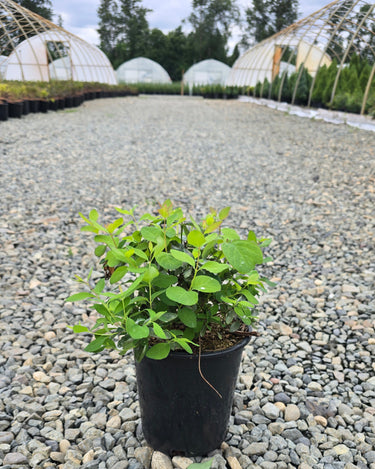
– Opposite, oval to rounded leaves

Soft green, slightly bluish, with smooth or slightly toothed edges

Deciduous, dropping leaves in fall

– Often displays a soft yellow fall color

Flower Description

– Small, bell-shaped white to pinkish flowers

– Appear in clusters in late spring to early summer

– Modest in appearance but highly attractive to pollinators

Pruning & Maintenance

When: Late winter or early spring before new growth

How: Prune to shape, remove dead wood, or rejuvenate by cutting back old stems to the ground

– Responds well to renewal pruning every 2–3 years to maintain vigor

– Can be aggressively pruned if needed to control spread

Water Needs

Low to moderate water needs

– Drought-tolerant once established

– Performs well in dry slopes or restoration sites, but also tolerates occasional wet soils

Light Needs

– Grows in full sun to part shade

– Best fruit production and denser growth occur in full sun

Harvesting

Not edible for humans – berries are mildly toxic if ingested

– Historically used for crafts and decoration, not culinary use

– Native peoples used parts of the plant medicinally (not recommended for modern ingestion)

Fertilizing

– Generally not required in naturalized or average garden soil

– In poor soils, a light compost top-dressing in spring can boost growth

– Avoid heavy fertilization, which can lead to lanky stems

Additional Care Tips N/A
Pollination

Self-fertile

– Pollinated by bees, flies, and other insects

– Blooms are small but nectar-rich and valuable for pollinators

Companion Plants

Amelanchier alnifolia – native shrub with spring blooms and summer berries

Ribes sanguineum – early-blooming native that thrives in similar habitats

Mahonia aquifolium – for evergreen texture and pollinator value

Cornus sericea – red stems provide contrast in winter

Ferns or native grasses – for textural ground-level interest

Flowering and Seasonality

Spring: New leaf emergence and flowering

Summer: Foliage matures; fruit begins forming

Fall: Snow-white berries persist after leaves fall

Winter: Bare stems with decorative white berries, often lasting into early winter

– Small, bell-shaped white to pinkish flowers

– Appear in clusters in late spring to early summer

– Modest in appearance but highly attractive to pollinators

Pet Friendly

No

Growing Zone
  • Zone 2
  • Zone 3
  • Zone 4
  • Zone 5
  • Zone 6
  • Zone 7

Click to enlarge