Growing Information

Growing zone guide
Growing Zone Zone 3, Zone 4, Zone 5, Zone 6, Zone 7
Sunlight Bright light to partial shade
Type of Soil Alkaline to neutral
Mature Height 10 to 12 ft.
Maintenance Level Low maintenance
Water Requirement Moderate watering (once a week)

Learn more about this plant

Additional Information
Growth Rate

Moderate; grows approximately 6–9 inches per year.


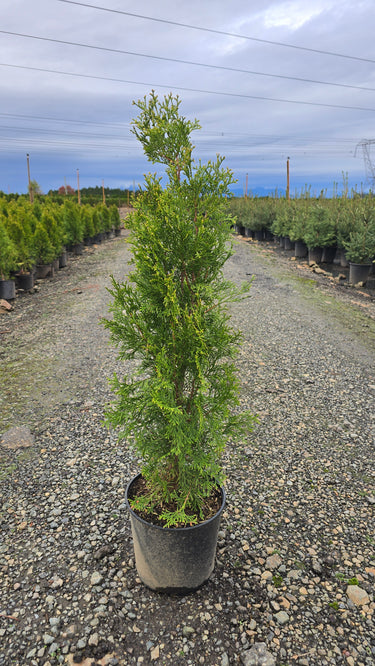
Mature size: about 10–12 feet tall and 2–3 feet wide, forming a tight, columnar silhouette.

Colorful Leaves Yes
Flowering No
Bloom Color N/A
Ornamental Berries N/A
Disease resistant Yes
Cold Tolerant Yes
Heat Tolerant No
Drought Tolerant No
Deer Resistant No
Edible No
Wildlife Attraction

Provides excellent shelter and nesting sites for small birds.


Foliage may offer limited winter protection for pollinators and beneficial insects.


Generally deer resistant, but young foliage may occasionally be nibbled in early spring or harsh winters.

Self-pollinating Self-pollinating
Seasonality

Spring: Fresh green growth flush.


Summer: Vibrant golden-green foliage remains bright and dense.


Fall: Retains color without bronzing, unlike many other arborvitae.


Winter: Maintains form and rich color, offering reliable evergreen presence year-round.

Ideal For

– Excellent for hedges, privacy screens, foundation plantings, narrow borders, and container gardens

Leaf Description

Dense, scale-like foliage in flattened sprays, bright emerald-green with golden undertones.


Maintains color exceptionally well through all seasons, even in winter.


Aromatic when crushed, releasing a pleasant resinous scent.

Flower Description

Inconspicuous; produces small, yellowish male pollen cones and greenish female cones in spring.


Not ornamental—foliage and form are the primary aesthetic features.

Pruning & Maintenance

Minimal pruning required; maintains a naturally narrow, pyramidal shape.


Lightly trim in early spring or late summer to shape or control height.


Avoid cutting into old wood, as Thuja does not regenerate from brown, woody sections.


Remove any damaged or diseased branches promptly to maintain air circulation and health.

Water Needs

Keep soil consistently moist, especially during the first two growing seasons.


Once established, moderately drought tolerant, but best performance occurs with regular deep watering.


Avoid overly wet or compacted soil; Thuja prefers evenly moist but well-drained conditions.

Light Needs

Prefers full sun (6+ hours daily) for brightest golden-green foliage color.


Tolerates light partial shade but may lose vibrancy in deep shade.

Harvesting

Produces tiny, oval cones (about ½ inch long) that turn brown as they mature.


Cones may persist through winter but are not ornamental or edible.


No harvesting required—primarily valued for evergreen foliage and structure.

Fertilizing

Fertilize in early spring with a slow-release evergreen or conifer fertilizer (e.g., 18-6-12).


Avoid over-fertilization; excessive nitrogen can cause soft, weak growth.


Compost or organic mulch applied annually maintains soil fertility and moisture.


Additional Care Tips N/A
Pollination

Monoecious species—produces both male and female cones on the same plant.


Wind-pollinated, not dependent on insects.


Cones form after pollination in spring and mature by fall.

Companion Plants

Shrubs: Hydrangea, Spiraea, and Physocarpus create color contrast and layered texture.


Perennials: Salvia, Rudbeckia, and Echinacea provide summer color at the base.


Evergreens: Juniper or Picea offer textural contrast in mixed evergreen borders.


Ideal for formal hedges, property borders, foundation plantings, or container gardens.

Flowering and Seasonality

Spring: Fresh green growth flush.


Summer: Vibrant golden-green foliage remains bright and dense.


Fall: Retains color without bronzing, unlike many other arborvitae.


Winter: Maintains form and rich color, offering reliable evergreen presence year-round.

Inconspicuous; produces small, yellowish male pollen cones and greenish female cones in spring.


Not ornamental—foliage and form are the primary aesthetic features.

Pet Friendly

Yes

Growing Zone
  • Zone 3
  • Zone 4
  • Zone 5
  • Zone 6
  • Zone 7

Click to enlarge