Growing Information

Growing zone guide
Growing Zone Zone 3, Zone 4, Zone 5, Zone 6, Zone 7
Sunlight Medium to bright light
Type of Soil Slightly acidic to neutral
Mature Height 20 to 30 feet
Maintenance Level Low maintenance
Water Requirement Moderate watering (once a week)

Learn more about this plant

Additional Information
Growth Rate

  • Speed: Moderate, with an annual growth rate of 12-24 inches.
  • Mature Size: At maturity, Thuja 'Nigra' can reach a height of 20-30 feet and a spread of 4-6 feet, forming a dense, pyramidal shape.
Colorful Leaves No
Flowering No
Bloom Color N/A
Ornamental Berries N/A
Disease resistant Yes
Cold Tolerant Yes
Heat Tolerant No
Drought Tolerant No
Deer Resistant No
Edible No
Wildlife Attraction

Thuja occidentalis 'Nigra' provides shelter for birds and small wildlife, offering a safe nesting site within its dense foliage. The small cones produced by the tree may also attract certain bird species. In addition, deer tend to avoid Nigra, making it a great choice for deer-prone areas.

Self-pollinating Self-pollinating
Seasonality
  • Seasonality: Evergreen; retains its dark green color year-round.
  • Flowering Season: Conifers like Thuja occidentalis 'Nigra' do not produce significant flowers. Instead, they develop small, inconspicuous cones.
Ideal For
  • Privacy Screens & Hedges – One of the best arborvitaes for dense, tall screens
  • Windbreaks – Reliable protection in northern and open landscapes
  • Formal Borders – Neat, symmetrical shape suits structured layouts
  • Foundation Plantings – Adds vertical structure to large home exteriors
  • Winter Color Accent – Deep green foliage holds beautifully in snow-covered gardens

Leaf Description

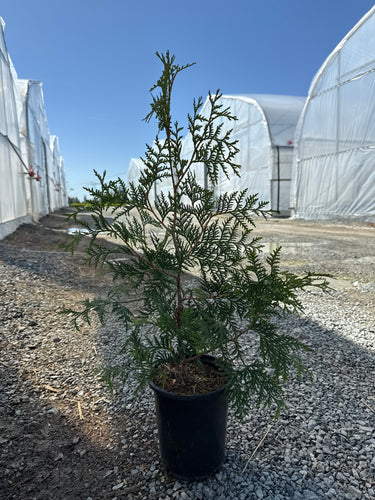
The foliage of Thuja 'Nigra' consists of flat, scale-like leaves that are dark green and dense, giving the tree a lush, full appearance. The leaves grow in sprays, creating a soft, feathery texture that adds visual appeal and makes the tree ideal for hedges and screens. The foliage remains vibrant even during the cold winter months, making this a standout evergreen in the landscape.

Flower Description

Although 'Nigra' is not known for its flowers, it produces small, round cones that mature in the fall. These cones are about ½ inch long and are brown when mature.

Pruning & Maintenance

Pruning is generally not required to maintain the tree’s natural shape, but it can be pruned in late winter or early spring to control size or shape if desired. Light trimming to remove dead or damaged branches can help keep the tree healthy and promote dense growth. Avoid heavy pruning, as this can slow growth.

Water Needs

Thuja 'Nigra' requires regular watering, especially during the first growing season to establish a strong root system. Water deeply once or twice a week, depending on weather conditions. Once established, it is more drought-tolerant but still benefits from consistent moisture, particularly during hot, dry periods.

Light Needs

This arborvitae thrives in full sun but can tolerate partial shade. For the best foliage color and growth, plant in a location that receives at least 6 hours of direct sunlight per day. In partial shade, growth may be slower, and the foliage color may not be as intense.

Harvesting

There is no need to harvest from Thuja occidentalis 'Nigra', as it is primarily grown for its ornamental qualities. The small cones that develop are not typically used for decorative or commercial purposes.

Fertilizing

Fertilize in early spring with a balanced, slow-release fertilizer (such as 10-10-10) to encourage healthy growth. Established trees may only need fertilization every few years, especially if planted in nutrient-rich soil. Avoid over-fertilizing, as this can lead to weak growth.

Additional Care Tips
  • Mulching: Apply a 2-3 inch layer of mulch around the base of the tree to retain moisture, reduce weeds, and protect the roots from temperature fluctuations. Keep mulch away from the trunk to prevent rot.
  • Pest and Disease Resistance: Thuja 'Nigra' is relatively pest-resistant but may occasionally be affected by bagworms or spider mites. Regular inspections and good air circulation around the tree can help prevent pest infestations.
  • Winter Hardiness: Very cold-hardy and capable of withstanding harsh winter conditions without losing its color or form.
Pollination

Thuja Nigra is self-pollinating.

Male cones: Small, pollen-bearing structures released in early spring

Female cones
: Tiny, scaly cones that develop into dry, seed-bearing cones by late summer

While Nigra can produce these cones, they are small, sparse, and not ornamental

Pollination is not required
for the plant’s performance, shape, or health

Companion Plants

Grasses & Groundcovers:

  • Festuca glauca ‘Elijah Blue’ – Silvery-blue grass provides color contrast
  • Pachysandra terminalis – Evergreen groundcover for shaded bases
  • Carex ‘Evergold’ – Soft, arching foliage with golden variegation

Flowering Perennials:

  • Echinacea purpurea (Purple Coneflower) – Upright blooms soften tall hedges
  • Heuchera ‘Caramel’ or ‘Obsidian’ – Contrasting foliage colors (amber, burgundy)
  • Astilbe ‘Fanal’ – Red flower plumes thrive in partial shade

Shrubs & Small Evergreens:

  • Spiraea japonica ‘Goldmound’ – Golden foliage pops against Nigra’s dark green
  • Buxus (Boxwood) – Formal, rounded structure balances Nigra’s vertical lines
  • Hydrangea paniculata ‘Little Lime’ – Creamy white blooms offer seasonal variation
Flowering and Seasonality
  • Seasonality: Evergreen; retains its dark green color year-round.
  • Flowering Season: Conifers like Thuja occidentalis 'Nigra' do not produce significant flowers. Instead, they develop small, inconspicuous cones.

Although 'Nigra' is not known for its flowers, it produces small, round cones that mature in the fall. These cones are about ½ inch long and are brown when mature.

Pet Friendly

Yes

Growing Zone
  • Zone 3
  • Zone 4
  • Zone 5
  • Zone 6
  • Zone 7

Click to enlarge