Growing Information

Growing zone guide
Growing Zone Zone 3, Zone 4, Zone 5, Zone 6, Zone 7
Sunlight Medium to bright light
Type of Soil Slightly acidic to neutral
Mature Height 6 to 8 feet
Maintenance Level Low maintenance
Water Requirement Low watering (once every 2 weeks)

Learn more about this plant

Additional Information
Growth Rate

  • Speed : Slow to moderate; typically grows 3 to 6 inches per year.
  • Final Size: 3 to 5 feet tall and 4 to 6 feet wide.
Colorful Leaves No
Flowering No
Bloom Color N/A
Ornamental Berries N/A
Disease resistant Yes
Cold Tolerant Yes
Heat Tolerant No
Drought Tolerant No
Deer Resistant No
Edible No
Wildlife Attraction

Attracts:

  • Birds: Provides shelter and nesting opportunities, making it appealing for wildlife gardens.
  • Pollinators: May attract some bees, though it’s not primarily known for this.
Self-pollinating Self-pollinating
Seasonality
  • Growth Season: Spring to Fall
  • Winter Interest: Retains vibrant green color and structure throughout winter.
  • Bloom Time: This variety is primarily appreciated for its foliage and does not produce significant flowers.
Ideal For

Foundation Plantings – Excellent for softening building lines and corners

Low Hedges and Borders – Forms a neat, natural hedge when planted in a row

Rock Gardens – Its compact form fits beautifully in structured plantings

Winter Interest – Dense foliage offers reliable color and form even in snow-covered gardens

Mixed Beds – Works well with flowering perennials or grasses for layered plantings

Mass Planting – Ideal for repetition and symmetry in landscape designs

Leaf Description

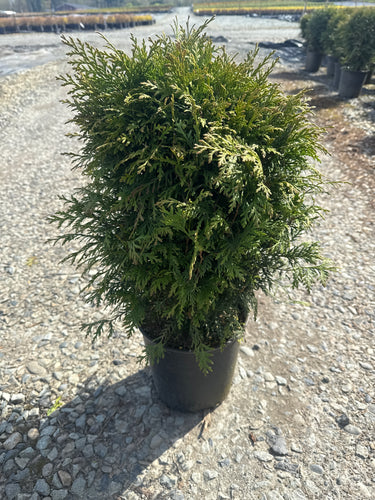
The leaves are scale-like and densely packed, presenting a rich green hue that adds texture and depth to your garden. The foliage remains vibrant year-round.

Flower Description

Produces inconspicuous flowers, which are not the main attraction of this plant.

Pruning & Maintenance

  • When to Prune: Late winter to early spring is ideal for shaping and removing any dead or damaged branches.
  • Pruning Tips: Minimal pruning is needed; shape lightly to maintain its globe form.
Water Needs

  • Water Requirements: Regular watering during the first year is essential; once established, it is drought-tolerant.
  • Frequency: Water weekly during dry spells, ensuring the soil remains moist but not waterlogged.
Light Needs

  • Prefers full sun to partial shade, thriving best with at least 6 hours of sunlight daily.
Harvesting

While Thuja ‘Woodwardii’ is not harvested for food or flowers, it is often used in ornamental harvesting for its evergreen foliage, particularly in holiday decor and natural arrangements.

Fertilizing

  • When to Fertilize: Early spring with a balanced, slow-release fertilizer.
  • Frequency: Once a year is generally sufficient.
Additional Care Tips
  • Mulching: Apply a layer of mulch in spring to help retain moisture and suppress weeds.
  • Pests & Diseases: Generally pest-resistant; occasional monitoring for scale or bagworm is recommended.
Pollination

  • Wind-pollinated, but flowering is not significant for this variety.
Companion Plants

Flowering Perennials:

  • Heuchera ‘Amber Waves’ – Golden foliage contrasts beautifully with deep green thuja
  • Echinacea ‘Cheyenne Spirit’ – Mixed-color blooms offer long-lasting interest
  • Astilbe ‘Fanal’ – Feathery red plumes and shade tolerance complement Woodwardii’s form

Ornamental Grasses & Groundcovers:

  • Festuca glauca ‘Elijah Blue’ – Striking blue clumps for color contrast
  • Sedum ‘Angelina’ – Low-growing golden succulent
  • Pachysandra terminalis – Evergreen groundcover for part-shade underplanting

Evergreens & Shrubs:

  • Buxus (Boxwood) – Pairs well in formal or structured gardens
  • Spiraea ‘Goldmound’ – Bright chartreuse foliage for color balance
  • Berberis ‘Concorde’ – Deep burgundy foliage makes a bold companion choice

Flowering and Seasonality
  • Growth Season: Spring to Fall
  • Winter Interest: Retains vibrant green color and structure throughout winter.
  • Bloom Time: This variety is primarily appreciated for its foliage and does not produce significant flowers.

Produces inconspicuous flowers, which are not the main attraction of this plant.

Pet Friendly

Yes

Growing Zone
  • Zone 3
  • Zone 4
  • Zone 5
  • Zone 6
  • Zone 7

Click to enlarge