Growing Information

Growing zone guide
Growing Zone Zone 5, Zone 6, Zone 7, Zone 8
Sunlight Bright light
Type of Soil Slightly acidic to neutral
Mature Height 20 to 25 feet
Maintenance Level Low maintenance
Water Requirement Low watering (once every 2 weeks)

Learn more about this plant

Additional Information
Growth Rate

  • Speed: Fast-growing, adding up to 2 feet per year under optimal conditions.
  • Mature Size: Reaches a height of 20-30 feet and a spread of 4-6 feet, making it ideal for narrow spaces or as a vertical accent.

Colorful Leaves No
Flowering No
Bloom Color N/A
Ornamental Berries N/A
Disease resistant Yes
Cold Tolerant Yes
Heat Tolerant No
Drought Tolerant No
Deer Resistant No
Edible No
Wildlife Attraction

Thuja plicata 'Northern Spire' attracts a variety of wildlife. Birds, such as finches and chickadees, may use the dense foliage for nesting, while small mammals can seek shelter within its branches. The tree’s cones may also provide a food source for some bird species.

Self-pollinating Self-pollinating
Seasonality
  • Seasonality: Evergreen; retains its foliage year-round.
  • Flowering Season: Conifers like 'Northern Spire' do not produce significant flowers, instead developing small cones.
Ideal For
  • Buxus (Boxwood) – Pairs well in formal or structured gardens
  • Spiraea ‘Goldmound’ – Bright chartreuse foliage for color balance
  • Berberis ‘Concorde’ – Deep burgundy foliage makes a bold companion choice
  • Tall Privacy Screens – Great for narrow urban lots or along fences
  • Formal Accents – Use in pairs to flank gates, paths, or entrances
  • Windbreaks – Effective in cold, exposed locations
  • Foundation Plantings – Adds height and form without excess width
  • Winter Interest – Maintains strong green color and upright shape in snowy landscapes

    Container Gardening (large pots) – With winter protection, works well in tight patios or structured gardens
Leaf Description

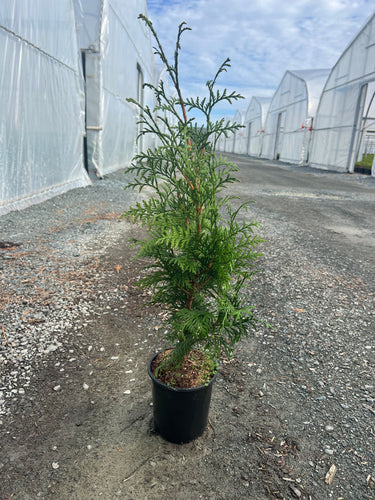
The foliage of 'Northern Spire' is deep green and glossy, consisting of flat, scale-like leaves that grow in sprays. The foliage gives the tree a lush, full appearance and maintains its vibrant color year-round, even through winter. The fine texture and upright form make it a standout in formal and informal landscapes alike.

Flower Description

Cones: Small, inconspicuous cones develop in spring and mature through the summer. These cones are not ornamental, but they play a role in the tree’s reproductive cycle. Male cones produce pollen, while female cones develop seeds.

Pruning & Maintenance

Minimal pruning is required due to the tree’s natural, narrow form. Light pruning can be done in late winter or early spring to remove dead or damaged branches. Pruning is also useful for maintaining height or shaping the tree, but avoid heavy pruning, as this can slow its growth.

Water Needs

Water regularly during the first growing season to help establish a strong root system. After the tree is established, water deeply once a week, especially during hot or dry periods. Keep the soil consistently moist, but ensure good drainage to prevent root rot.

Light Needs

'Northern Spire' thrives in full sun but can tolerate partial shade. For the best growth and color, plant in a location that receives at least 6 hours of direct sunlight per day. In partial shade, the tree may grow more slowly, but it will still maintain its columnar shape.

Harvesting

There is no need to harvest from Thuja plicata 'Northern Spire', as it is primarily grown for its ornamental value. The small cones and foliage are not typically used for decorative or commercial purposes.

Fertilizing

Fertilize in early spring with a balanced, slow-release fertilizer (such as 10-10-10) to promote healthy growth. Young trees may benefit from annual fertilization, while mature trees typically require less feeding. Avoid over-fertilizing, as this can lead to excessive growth.

Additional Care Tips
  • Mulching: Apply a 2-3 inch layer of mulch around the base of the tree to help retain soil moisture, regulate temperature, and prevent weed growth.
  • Pest and Disease Resistance: 'Northern Spire' is resistant to many common pests and diseases. However, occasional issues with spider mites or bagworms may occur, especially in hot, dry conditions. Regular watering and monitoring can help prevent infestations.
  • Winter Hardiness: Cold-hardy and able to withstand harsh winters without losing its color or form, making it an excellent choice for year-round interest in colder climates.
Pollination

No need for a second plant for pollination or seed development

Produces both male (pollen-bearing) and female (seed-bearing) cones on the same plant

Pollinated by wind — not reliant on insects or animals


Companion Plants

Flowering Perennials:

  • Echinacea purpurea (Coneflower) – Upright blooms soften columnar form
  • Heuchera ‘Caramel’ – Bronze and caramel tones contrast nicely with green foliage
  • Lavandula angustifolia – Aromatic and drought-tolerant with soft silver tones

Grasses & Groundcovers:

  • Festuca glauca ‘Elijah Blue’ – Compact blue-toned clumps provide contrast
  • Carex oshimensis ‘Everillo’ – Lime-green sedge that brightens shady bases
  • Sedum ‘Angelina’ – Ground-hugging, golden foliage with great texture

Evergreens & Shrubs:

  • Buxus (Boxwood) – Compact, rounded forms for formal plantings
  • Spiraea ‘Goldmound’ – Bright foliage and soft flowers contrast well
  • Hydrangea paniculata ‘Little Lime’ – Adds creamy blooms and rounded balance
Flowering and Seasonality
  • Seasonality: Evergreen; retains its foliage year-round.
  • Flowering Season: Conifers like 'Northern Spire' do not produce significant flowers, instead developing small cones.

Cones: Small, inconspicuous cones develop in spring and mature through the summer. These cones are not ornamental, but they play a role in the tree’s reproductive cycle. Male cones produce pollen, while female cones develop seeds.

Pet Friendly

Yes

Growing Zone
  • Zone 5
  • Zone 6
  • Zone 7
  • Zone 8

Click to enlarge