Growing Information

Growing zone guide
Growing Zone Zone 4, Zone 5, Zone 6, Zone 7, Zone 8, Zone 9
Sunlight Bright light
Type of Soil Neutral to alkaline
Mature Height 1 to 2 inches
Maintenance Level Low maintenance
Water Requirement Low watering (once every 2 weeks)

Learn more about this plant

Additional Information
Growth Rate

– Moderate to fast

– Fills in quickly when planted in well-drained, sunny conditions

Colorful Leaves No
Flowering Yes
Bloom Color White
Ornamental Berries N/A
Disease resistant Yes
Cold Tolerant Yes
Heat Tolerant Yes
Drought Tolerant Yes
Deer Resistant Yes
Edible Yes
Wildlife Attraction

– Attracts bees, butterflies, and other beneficial insects

– Provides valuable nectar during summer bloom period

Self-pollinating Self-pollinating
Seasonality

– Spring: new growth emerges as low, dense mats

– Late spring to early summer: flowering period

– Summer to fall: maintains evergreen foliage in warm climates

– Winter: semi-evergreen or dormant depending on zone

Ideal For

– Groundcover and between stepping stones

– Herb gardens

– Rock gardens

– Edging for walkways

– Drought-tolerant culinary plantings

Leaf Description

– Tiny, oval, dark green leaves, closely packed along creeping stems

– Aromatic when crushed; used in herbal applications, though mild in flavor

– Evergreen to semi-evergreen depending on climate

Flower Description

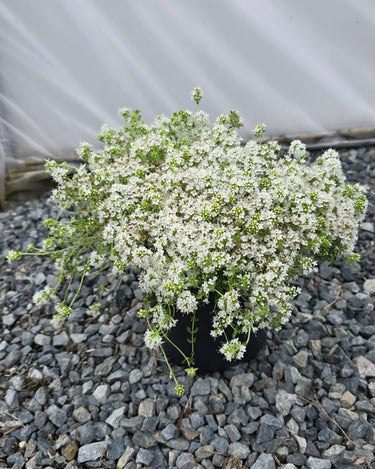
Small white flowers bloom in dense clusters along the creeping stems

– Blooming period: late spring to early summer (May–July)

– Subtle and elegant compared to more common pink or purple thyme varieties

– Flowers create a soft, shimmering effect across the mat

Pruning & Maintenance

– Shear back lightly after flowering to maintain form and encourage dense regrowth

– Trim back any woody or thinning patches in spring

– Tolerates occasional mowing if used between pavers or stepping stones

Water Needs

Very drought tolerant once established

– Requires consistent watering during the first 2–3 weeks after planting

– After establishment, water only during extended droughts

– Avoid excessive moisture or overhead watering, which can cause root rot

Light Needs

Full sun (6+ hours/day) is essential for compact growth and profuse blooming

– Tolerates very light shade but may become sparse and less fragrant

Harvesting

– Can be lightly harvested for culinary or ornamental use

– Best harvested in the morning before flowering for essential oil concentration

– Clip stems sparingly to preserve plant vigor and shape

Fertilizing

– Typically not needed; thrives in lean soils

– Light compost or low-nitrogen fertilizer in spring if growth is weak

– Avoid overfertilizing—promotes legginess and reduces essential oil production

Additional Care Tips N/A
Pollination

– Pollinated by bees, hoverflies, and butterflies

– Flowers are rich in nectar and support a wide variety of pollinators

Companion Plants

Sedum spurium – similar habit and drought tolerance

Delosperma cooperi – low-growing succulent with vibrant blooms

Sempervivum (Hens & Chicks) – contrast in texture and form

Lavandula angustifolia – aromatic and Mediterranean in character

Achillea millefolium – upright pollinator plant for layered interest

Flowering and Seasonality

– Spring: new growth emerges as low, dense mats

– Late spring to early summer: flowering period

– Summer to fall: maintains evergreen foliage in warm climates

– Winter: semi-evergreen or dormant depending on zone

Small white flowers bloom in dense clusters along the creeping stems

– Blooming period: late spring to early summer (May–July)

– Subtle and elegant compared to more common pink or purple thyme varieties

– Flowers create a soft, shimmering effect across the mat

Pet Friendly

Yes

Growing Zone
  • Zone 4
  • Zone 5
  • Zone 6
  • Zone 7
  • Zone 8
  • Zone 9

Click to enlarge