
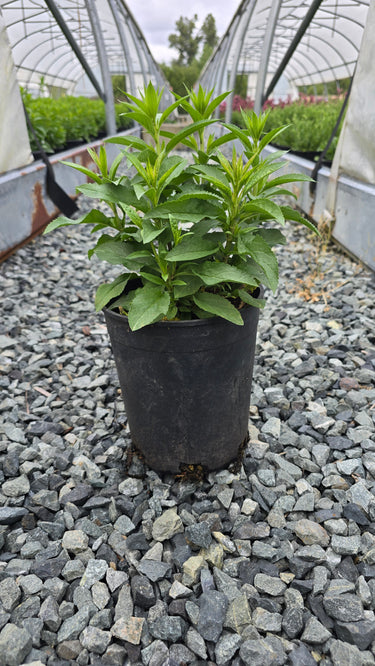

Royal Candles Speedwell
Bright violet-blue candle-like flower spikes bloom from early summer through midsummer on compact upright stems — a classic, reliable, and prolific speedwell for sunny mixed borders and pollinator gardens. (Veronica spicata 'Royal Candles')
Veronica spicata 'Royal Candles' is a refined, compact speedwell that delivers elegant structure and intense violet-blue flower spikes in early to mid-summer. Its tidy, upright habit and deep green foliage make it perfect for small garden spaces, mixed borders, and pollinator plantings.
This cultivar stands out for its exceptional form, vivid color, and reblooming potential with light maintenance. Reliable and tough, 'Royal Candles' is an ideal choice for sunny gardens that need a vertical accent without the floppiness or fuss.
Your payment information is processed securely. We do not store credit card details nor have access to your credit card information.
Growing Information
Growing zone guideLearn more about this plant
Additional Information
| Growth Rate | |
|---|---|
| Colorful Leaves | No |
| Flowering | |
| Bloom Color | Blue |
| Ornamental Berries | N/A |
| Disease resistant | |
| Cold Tolerant | |
| Heat Tolerant | |
| Drought Tolerant | |
| Deer Resistant | |
| Edible | |
| Wildlife Attraction | |
| Self-pollinating | Self-pollinating |
| Seasonality | |
| Ideal For | |
| Leaf Description | |
| Flower Description | |
| Pruning & Maintenance | |
| Water Needs | |
| Light Needs | |
| Harvesting | |
| Fertilizing | |
| Additional Care Tips | N/A |
| Pollination | |
| Companion Plants |
Flowering and Seasonality
Pet Friendly
Yes
Growing Zone
- Zone 4
- Zone 5
- Zone 6
- Zone 7
- Zone 8
Click to enlarge
Growing Zone

You may also like


