Growing Information

Growing zone guide
Growing Zone Zone 4, Zone 5, Zone 6, Zone 7, Zone 8
Sunlight Bright light to partial shade
Type of Soil Slightly acidic to neutral
Mature Height 2 to 3 ft.
Maintenance Level Low maintenance
Water Requirement Moderate watering (once a week)

Learn more about this plant

Additional Information
Growth Rate

Moderate; develops into a dense, rounded shrub.


Mature size: approximately 2–3 feet tall and 3–4 feet wide.


Compact and naturally tidy, requiring little intervention to maintain shape.

Colorful Leaves Yes
Flowering Yes
Bloom Color Pink , Purple & Lavender
Ornamental Berries N/A
Disease resistant Yes
Cold Tolerant Yes
Heat Tolerant Yes
Drought Tolerant Yes
Deer Resistant Yes
Edible No
Wildlife Attraction

Highly attractive to hummingbirds, bees, and butterflies during the flowering season.


Provides nectar but little wildlife shelter due to compact size.


Generally deer resistant, though young shoots may be nibbled occasionally.

Self-pollinating Self-pollinating
Seasonality

Spring: New growth and first heavy bloom flush.


Summer: Continued flowering with attractive foliage color.


Fall: Foliage may develop deeper bronze tones before dropping.


Winter: Compact structure provides visual interest and texture in dormant months.

Ideal For

– Perfect for borders, low hedges, foundation plantings, mixed beds, or as a compact accent in small gardens and containers

Leaf Description

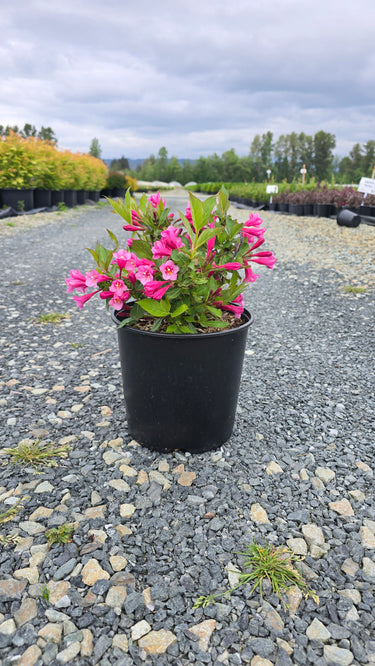
Oval, green leaves with a distinctive purplish-bronze tint on newer growth.


Fine texture and medium density create a lush, compact appearance.


Foliage provides rich contrast to the plant’s bright blooms.

Flower Description

Produces abundant, tubular-shaped flowers in deep pink to rosy-red with soft white throats.


Blooms heavily in late spring to early summer, with a light rebloom possible in late summer.


Flowers are fragrant and highly ornamental, standing out against dark foliage.


Pruning & Maintenance

Prune immediately after flowering, as next year’s blooms develop on old wood.


Remove spent flower clusters and thin older stems at the base to encourage new growth.


Lightly shape the plant to maintain a compact, rounded form.


Avoid heavy pruning in late summer or fall to prevent removing next season’s buds.

Water Needs

Keep soil consistently moist during the first growing season to establish deep roots.


Once established, moderately drought tolerant, but regular deep watering enhances bloom performance.


Avoid overly soggy conditions; ensure good drainage to prevent root rot.


Light Needs

Prefers full sun (6+ hours daily) for the best bloom color and density.


Tolerates light partial shade but may produce fewer flowers.

Harvesting

After flowering, small brown seed capsules form, but they are not ornamental.


For tidier appearance, remove spent blooms before seed formation.


Propagation is best done via softwood cuttings in early summer rather than from seed.

Fertilizing

Feed in early spring with a balanced, slow-release fertilizer (e.g., 10-10-10).


A second light feeding after flowering can promote strong new growth.


Incorporate compost annually to maintain soil health and moisture balance.

Additional Care Tips N/A
Pollination

Insect-pollinated, primarily by bees, butterflies, and hummingbirds attracted to its tubular flowers.


Self-fertile, but cross-pollination may increase seed production.


Flowers provide an abundant nectar source for pollinators.

Companion Plants

Perennials: Salvia, Coreopsis, Echinacea, and Nepeta for complementary colors and textures.


Shrubs: Spiraea, Potentilla, and Dwarf Lilac for mixed borders.


Evergreens: Boxwood, Juniper, or small Thuja varieties for structure and contrast.


Works beautifully in foundation plantings, borders, or as a low, colorful hedge.

Flowering and Seasonality

Spring: New growth and first heavy bloom flush.


Summer: Continued flowering with attractive foliage color.


Fall: Foliage may develop deeper bronze tones before dropping.


Winter: Compact structure provides visual interest and texture in dormant months.

Produces abundant, tubular-shaped flowers in deep pink to rosy-red with soft white throats.


Blooms heavily in late spring to early summer, with a light rebloom possible in late summer.


Flowers are fragrant and highly ornamental, standing out against dark foliage.


Pet Friendly

Yes

Growing Zone
  • Zone 4
  • Zone 5
  • Zone 6
  • Zone 7
  • Zone 8

Click to enlarge