
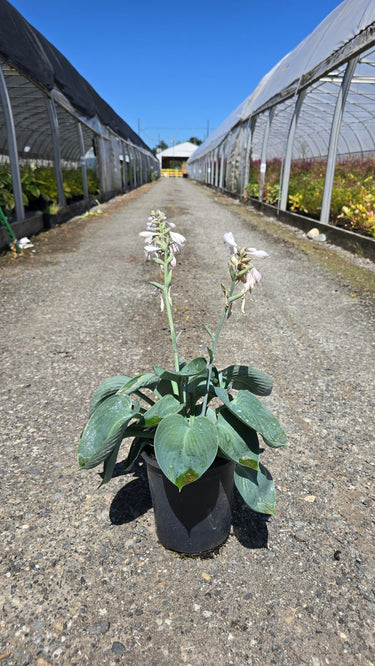

Hadspen Blue Hosta
Classic medium-large hosta with smooth intensely glaucous blue leaves forming a neat slug-resistant mound — a timeless choice for bringing cool blue tones to shade gardens. (Hosta hybrid 'Hadspen Blue')
Hosta 'Hadspen Blue' is a compact, foliage-focused perennial known for its richly saturated, powdery blue leaves and tidy form. A standout among blue hostas, this cultivar features thick, seersucker-textured leaves that retain their glaucous finish far better than most others, especially in shady environments. This makes it an ideal selection for gardeners seeking dependable blue tones in their landscape throughout the season.
Though smaller in stature, its leaves form a dense, layered mound that gives structure and contrast in mixed plantings. The pale lavender flowers that appear in midsummer are delicate and lightly attractive to pollinators, but the true value of 'Hadspen Blue' lies in its foliage. It thrives in woodland gardens, shaded borders, or hosta collections, where its intense color and elegant habit add refinement to every setting.
Your payment information is processed securely. We do not store credit card details nor have access to your credit card information.
Growing Information
Growing zone guideLearn more about this plant
Additional Information
| Growth Rate | |
|---|---|
| Colorful Leaves | Yes |
| Flowering | |
| Bloom Color | Purple & Lavender |
| Ornamental Berries | N/A |
| Disease resistant | |
| Cold Tolerant | |
| Heat Tolerant | |
| Drought Tolerant | |
| Deer Resistant | |
| Edible | |
| Wildlife Attraction | |
| Self-pollinating | Cross-pollinating |
| Seasonality | |
| Ideal For | |
| Leaf Description | |
| Flower Description | |
| Pruning & Maintenance | |
| Water Needs | |
| Light Needs | |
| Harvesting | |
| Fertilizing | |
| Additional Care Tips | N/A |
| Pollination | |
| Companion Plants |
Flowering and Seasonality
Pet Friendly
Yes
Growing Zone
- Zone 3
- Zone 4
- Zone 5
- Zone 6
- Zone 7
- Zone 8
- Zone 9
Click to enlarge
Growing Zone

You may also like


