Growing Information

Growing zone guide
Growing Zone Zone 6, Zone 7, Zone 8, Zone 9
Sunlight Bright light to partial shade
Type of Soil Slightly acidic to neutral
Mature Height 4 to 5 ft.
Maintenance Level Low maintenance
Water Requirement Moderate watering (once a week)

Learn more about this plant

Additional Information
Growth Rate

Moderate; steadily fills in without becoming invasive.


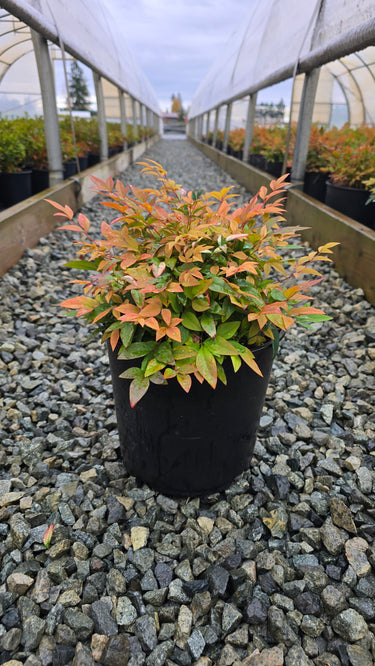
Mature size: approximately 4–5 feet tall and 2–3 feet wide with an upright, airy habit.

Colorful Leaves Yes
Flowering Yes
Bloom Color White
Ornamental Berries Red berries
Disease resistant Yes
Cold Tolerant Yes
Heat Tolerant Yes
Drought Tolerant No
Deer Resistant Yes
Edible No
Wildlife Attraction

Flowers attract pollinators such as bees and butterflies.


Berries provide visual winter interest and may attract birds (although berries are mildly toxic to some species).


Deer resistant, as its foliage is typically avoided.

Self-pollinating Cross-pollinating
Seasonality

Spring: New growth emerges pinkish-bronze.


Summer: Lush green foliage and white flower clusters.


Fall: Bright red to orange-red foliage and the appearance of berries.


Winter: Persistent red berries and bronze-red foliage tones for year-round color.

Ideal For

– Borders, foundation plantings, mixed shrub beds, containers, mass plantings, and four-season landscapes

Leaf Description

Evergreen to semi-evergreen, depending on climate.


Fine, lacy foliage emerges with bronze-pink new growth, transitions to bright emerald green in summer, and transforms to vivid scarlet, orange, and red tones in fall and winter.


Multi-tonal color shifts often occur on the same plant, creating a “sunset” effect.

Flower Description

Small, star-shaped white flowers appear in late spring, arranged in upright clusters above the foliage.


Flowers are lightly fragrant and contrast beautifully against the green leaves.

Pruning & Maintenance

Requires minimal pruning; naturally grows with a compact, upright form.


If shaping is desired, prune in late winter or early spring before new growth begins.


Remove any old or damaged stems at ground level to rejuvenate the plant.


Avoid heavy shearing, as this may disrupt its layered, graceful form.

Water Needs

Water regularly during establishment; once established, moderately drought tolerant.


Prefers evenly moist, well-drained soil.


Water deeply during prolonged heat or dry spells to maintain vibrant foliage color.

Light Needs

Prefers full sun to partial shade.


Best color intensity develops in full sun exposure.


Tolerates partial shade, especially in hot climates, to prevent leaf scorch.

Harvesting

Produces clusters of small red berries in fall and winter if pollinated.


Berries are ornamental only; not edible and mildly toxic if ingested by humans or pets.


Berries can be used in winter floral arrangements for seasonal décor.


Propagation is best achieved via semi-hardwood cuttings in summer rather than seed.

Fertilizing

Feed once annually in early spring with a balanced, slow-release fertilizer (10-10-10).


Avoid over-fertilizing, as Nandina performs best in moderately fertile soils.


Mulching with compost annually helps maintain consistent soil nutrients.

Additional Care Tips N/A
Pollination

Produces small white flowers in late spring to early summer that are pollinated by insects, mainly bees.


When pollinated, clusters of ornamental red berries develop in fall and persist into winter.

Companion Plants

Evergreens: Buxus, Ilex crenata, or Juniperus for texture contrast and evergreen structure.


Flowering shrubs: Loropetalum, Spiraea, or Abelia for seasonal bloom pairings.


Perennials: Heuchera, Hosta, Carex, and ornamental grasses to complement its fine foliage.


Design tip: Pairs beautifully with stone or gravel elements in Asian-inspired or contemporary gardens.

Flowering and Seasonality

Spring: New growth emerges pinkish-bronze.


Summer: Lush green foliage and white flower clusters.


Fall: Bright red to orange-red foliage and the appearance of berries.


Winter: Persistent red berries and bronze-red foliage tones for year-round color.

Small, star-shaped white flowers appear in late spring, arranged in upright clusters above the foliage.


Flowers are lightly fragrant and contrast beautifully against the green leaves.

Pet Friendly

No

Growing Zone
  • Zone 6
  • Zone 7
  • Zone 8
  • Zone 9

Click to enlarge