
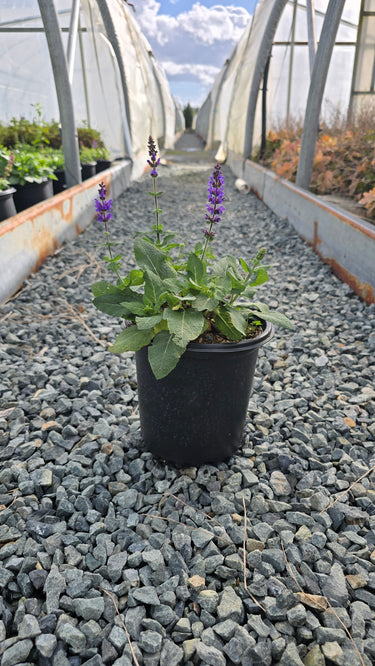

Bumbleblue Salvia
Dense compact salvia with rich deep blue-violet flower spikes beloved by bumblebees from late spring through midsummer, with reliable rebloom when sheared — an outstanding pollinator-magnet perennial. (Salvia nemorosa 'Bumbleblue')
$25.00
/
Sold out
Shipping calculated at checkout.
Compact, vibrant, and pollinator-friendly—Salvia ‘Bumbleblue’ bursts with deep violet-blue flower spikes from late spring through summer. Its tidy habit, drought tolerance, and deer resistance make it a perfect choice for borders, containers, and pollinator gardens.
Payment & Security
Your payment information is processed securely. We do not store credit card details nor have access to your credit card information.
Growing Information
Growing zone guide
Growing Zone
Zone 4,
Zone 5,
Zone 6,
Zone 7,
Zone 8
Sunlight
Bright light
Type of Soil
Alkaline to neutral
Mature Height
Maintenance Level
Water Requirement
Learn more about this plant
Additional Information
| Growth Rate | |
|---|---|
| Colorful Leaves | No |
| Flowering | |
| Bloom Color | Purple & Lavender, Blue |
| Ornamental Berries | N/A |
| Disease resistant | |
| Cold Tolerant | |
| Heat Tolerant | |
| Drought Tolerant | |
| Deer Resistant | |
| Edible | |
| Wildlife Attraction | |
| Self-pollinating | Cross-pollinating |
| Seasonality | |
| Ideal For | |
| Leaf Description | |
| Flower Description | |
| Pruning & Maintenance | |
| Water Needs | |
| Light Needs | |
| Harvesting | |
| Fertilizing | |
| Additional Care Tips | N/A |
| Pollination | |
| Companion Plants |
Flowering and Seasonality
Pet Friendly
Yes
Growing Zone
- Zone 4
- Zone 5
- Zone 6
- Zone 7
- Zone 8
Click to enlarge
Growing Zone

You may also like

William Baffin Explorer Rose
$51.00
/


Jazz Little Bluestem
From $25.00
/

Therese Bugnet Rose
$51.00
/

Winter Gem Sweet Box
$62.00
/

