Growing Information

Growing zone guide
Growing Zone Zone 4, Zone 5, Zone 6, Zone 7, Zone 8
Sunlight Bright light
Type of Soil Slightly acidic to neutral
Mature Height 16 to 18 inches
Maintenance Level Low maintenance
Water Requirement Moderate watering (once a week)

Learn more about this plant

Additional Information
Growth Rate

– Moderate

– Reaches mature size within one full growing season

Colorful Leaves No
Flowering Yes
Bloom Color Blue
Ornamental Berries N/A
Disease resistant Yes
Cold Tolerant Yes
Heat Tolerant Yes
Drought Tolerant No
Deer Resistant Yes
Edible No
Wildlife Attraction

– Attracts bees, butterflies, and hoverflies

– Deer and rabbit resistant

Self-pollinating Self-pollinating
Seasonality

– Spring: foliage emerges and forms tidy upright clumps

– Summer: long, blue spires begin blooming midseason

– Fall: flowering may continue into early fall with deadheading

– Winter: foliage dies back; plant goes dormant

Ideal For

– Mid-border plantings

– Pollinator gardens

– Vertical accent in perennial beds

– Cut flowers

Leaf Description

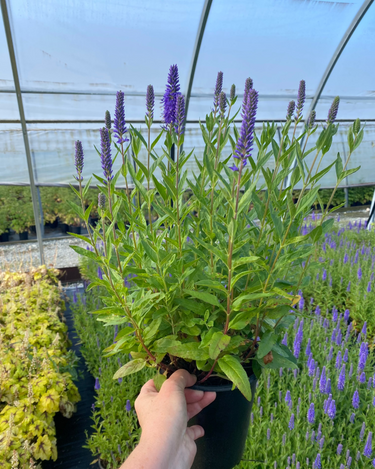
– Narrow, lance-shaped, medium green leaves

– Arranged in pairs along upright stems

– Forms a dense, tidy clump of vertical foliage

Flower Description

– Tall, bright sky-blue flower spikes held upright above the foliage

– Spires bloom from bottom to top, adding weeks of floral color

– Bloom period: midsummer into early fall (July–September)

– Adds strong vertical presence and vibrant color to borders

Pruning & Maintenance

– Deadhead spent blooms regularly to extend flowering

– Cut back by half after main bloom to encourage tidy regrowth or possible rebloom

– Trim to ground in early spring before new growth emerges

Water Needs

– Prefers evenly moist, well-drained soil

– Tolerates brief dry periods once established

– Water during prolonged heat or drought for best performance

Light Needs

Full sun (6+ hours/day) is ideal for best flowering and form

– Can tolerate light shade, but may reduce flowering density

Harvesting

– Excellent for cut flowers; harvest when lower florets open

– Long-lasting in fresh arrangements

– Dried seed heads are not typically used ornamentally

Fertilizing

– Apply balanced slow-release fertilizer in spring

– Supplemental feeding midseason may enhance rebloom in poor soils

– Avoid over-fertilizing, which may reduce bloom density

Additional Care Tips N/A
Pollination

– Pollinated by bees, butterflies, and other beneficial insects

– High nectar production makes it an excellent pollinator plant

Companion Plants

Echinacea purpurea – similar height and pollinator appeal

Achillea millefolium – flat flower heads complement spiky blooms

Rudbeckia fulgida – golden color contrast

Salvia nemorosa – similar upright structure with earlier bloom

Panicum virgatum – airy grasses for texture and movement

Flowering and Seasonality

– Spring: foliage emerges and forms tidy upright clumps

– Summer: long, blue spires begin blooming midseason

– Fall: flowering may continue into early fall with deadheading

– Winter: foliage dies back; plant goes dormant

– Tall, bright sky-blue flower spikes held upright above the foliage

– Spires bloom from bottom to top, adding weeks of floral color

– Bloom period: midsummer into early fall (July–September)

– Adds strong vertical presence and vibrant color to borders

Pet Friendly

Yes

Growing Zone
  • Zone 4
  • Zone 5
  • Zone 6
  • Zone 7
  • Zone 8

Click to enlarge