
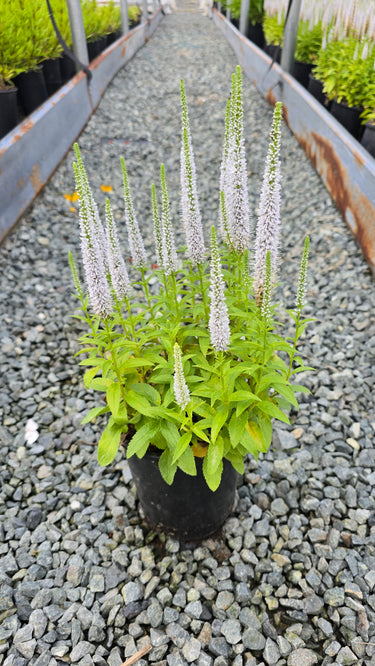

Snow Candles Speedwell
Pure white candle-like flower spikes rise cleanly above compact mounds in early summer — a crisp elegant white-flowered veronica for mixed borders, white-themed gardens, and pollinator-friendly planting. (Veronica spicata Snow Candles)
Veronica spicata 'Snow Candles' is a compact, upright perennial prized for its crisp white flower spikes and refined garden presence. Blooming from early to mid-summer, this tidy selection forms a low mound of lush green foliage topped by vertical wands of densely packed, pure white flowers. Its neat form, long bloom time, and excellent resistance to deer, drought, and disease make it a standout in sunny borders, containers, and pollinator gardens. At just 8–12 inches tall, 'Snow Candles' is perfect for edging, front-of-border plantings, and small-space designs. Its clean color and compact habit make it a valuable design element in formal or modern landscapes, while its nectar-rich blooms attract bees and butterflies throughout the season. Low-maintenance and adaptable, it thrives in full sun and well-drained soil, offering lasting beauty with minimal care.
Your payment information is processed securely. We do not store credit card details nor have access to your credit card information.
Growing Information
Growing zone guideLearn more about this plant
Additional Information
| Growth Rate | |
|---|---|
| Colorful Leaves | No |
| Flowering | |
| Bloom Color | White |
| Ornamental Berries | N/A |
| Disease resistant | |
| Cold Tolerant | |
| Heat Tolerant | |
| Drought Tolerant | |
| Deer Resistant | |
| Edible | |
| Wildlife Attraction | |
| Self-pollinating | Self-pollinating |
| Seasonality | |
| Ideal For | |
| Leaf Description | |
| Flower Description | |
| Pruning & Maintenance | |
| Water Needs | |
| Light Needs | |
| Harvesting | |
| Fertilizing | |
| Additional Care Tips | N/A |
| Pollination | |
| Companion Plants |
Flowering and Seasonality
Pet Friendly
Yes
Growing Zone
- Zone 4
- Zone 5
- Zone 6
- Zone 7
- Zone 8
Click to enlarge
Growing Zone

You may also like


