Growing Information

Growing zone guide
Growing Zone Zone 4, Zone 5, Zone 6, Zone 7, Zone 8
Sunlight Bright light to partial shade
Type of Soil Slightly acidic to neutral
Mature Height 10 to 14 inches
Maintenance Level Moderate maintenance
Water Requirement Moderate watering (once a week)

Learn more about this plant

Additional Information
Growth Rate

Moderate; quickly develops into compact, bushy mounds.


Clumps expand gradually and benefit from division every 3–4 years.

Colorful Leaves No
Flowering Yes
Bloom Color Red
Ornamental Berries N/A
Disease resistant No
Cold Tolerant Yes
Heat Tolerant Yes
Drought Tolerant No
Deer Resistant Yes
Edible No
Wildlife Attraction

Attracts butterflies, hummingbirds, and bees with fragrant blooms.


Provides nectar during peak summer bloom when pollinators are active.

Self-pollinating Cross-pollinating
Seasonality

Spring: foliage mound forms.


Summer: peak flowering with vibrant cherry-red blooms.


Fall: flowering tapers, foliage may yellow with frost.


Winter: dormant, crown rests until spring.

Ideal For

– Cottage gardens, pollinator gardens, borders, containers, cutting gardens, small urban gardens

Leaf Description

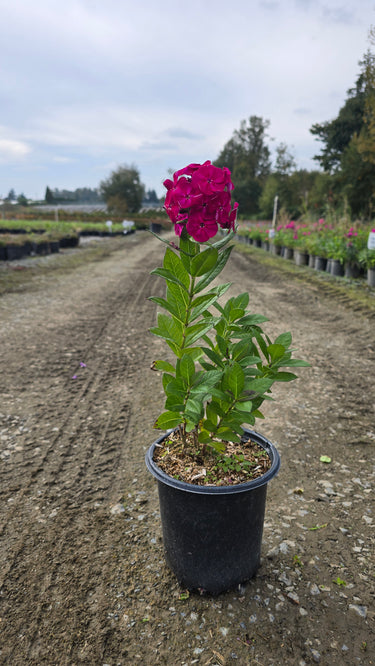
Narrow, lance-shaped green leaves arranged opposite along stems.


Forms dense, bushy foliage that creates a lush background for flowers.

Flower Description

Bright cherry-red blooms with darker centers, carried in large, fragrant clusters.


Flowers are long-lasting and excellent for cutting.


Continuous blooming from mid to late summer with deadheading.

Pruning & Maintenance
  • Deadhead spent flowers to encourage continuous blooming and extend season.

  • Cut back stems to ground level in late fall after frost or in early spring before new growth.

  • Light pinching of stems in spring may encourage bushier plants.

Water Needs

Requires regular watering, especially during dry spells.


Prefers evenly moist but well-drained soil.


Mulching helps conserve soil moisture and reduce heat stress.

Light Needs

Full sun (6+ hours daily) is ideal for best flowering.


Tolerates light afternoon shade, especially in hot summer regions.

Harvesting
  • Excellent as a cut flower; harvest when half the florets in a cluster are open.

  • Deadheading spent blooms promotes reblooming.

  • Dried seed heads have little ornamental value.

Fertilizing

Apply balanced, slow-release fertilizer in spring as new growth begins.


A midseason feeding supports extended flowering.


Avoid high-nitrogen fertilizers that encourage foliage over blooms.

Additional Care Tips N/A
Pollination

Pollinated by butterflies, hummingbirds, and bees attracted to its nectar-rich flowers.


Cross-pollination may occur between different phlox varieties.

Companion Plants

Summer perennials like Echinacea, Rudbeckia, Monarda, and Shasta Daisy.


Ornamental grasses such as Panicum and Pennisetum for contrast.


Complements Salvia, Nepeta, and Coreopsis in pollinator-friendly borders.


Works well in cottage gardens, cutting gardens, and mixed perennial beds.

Flowering and Seasonality

Spring: foliage mound forms.


Summer: peak flowering with vibrant cherry-red blooms.


Fall: flowering tapers, foliage may yellow with frost.


Winter: dormant, crown rests until spring.

Bright cherry-red blooms with darker centers, carried in large, fragrant clusters.


Flowers are long-lasting and excellent for cutting.


Continuous blooming from mid to late summer with deadheading.

Pet Friendly

Yes

Growing Zone
  • Zone 4
  • Zone 5
  • Zone 6
  • Zone 7
  • Zone 8

Click to enlarge